How to choose from the many types of book binding for your project
Bookbinding is how the printed pages of a book, brochure or magazine are held together and attached to the cover. It decides how the finished piece opens, how long it lasts, what it costs and how it feels in the hand.
The right choice mostly comes down to three things: your page count, the paper you are printing on and how the piece will be used. After more than 30 years in pre-press and print, the question I’m asked most often in our studio is simply “which binding should I go for?”
This guide covers each method we use, the rules that decide between them, and which one suits your project. If you already know you need a book, our perfect bound book printing page has the detail on formats and stocks.
Key points
- Saddle stitching suits brochures, magazines and booklets up to around 80 pages, depending on paper weight.
- Perfect binding (PUR) gives a squared, glued spine for thicker work; we run it from 2mm to 50mm.
- Sewn and casebound books are the most durable, and the usual choice for hardbacks and keepsake editions.
- Wiro and lay-flat bindings are for pages that need to open completely flat in use.
- Page count, paper and use decide the binding, so it is worth settling before artwork is finished.
Saddle stitch binding
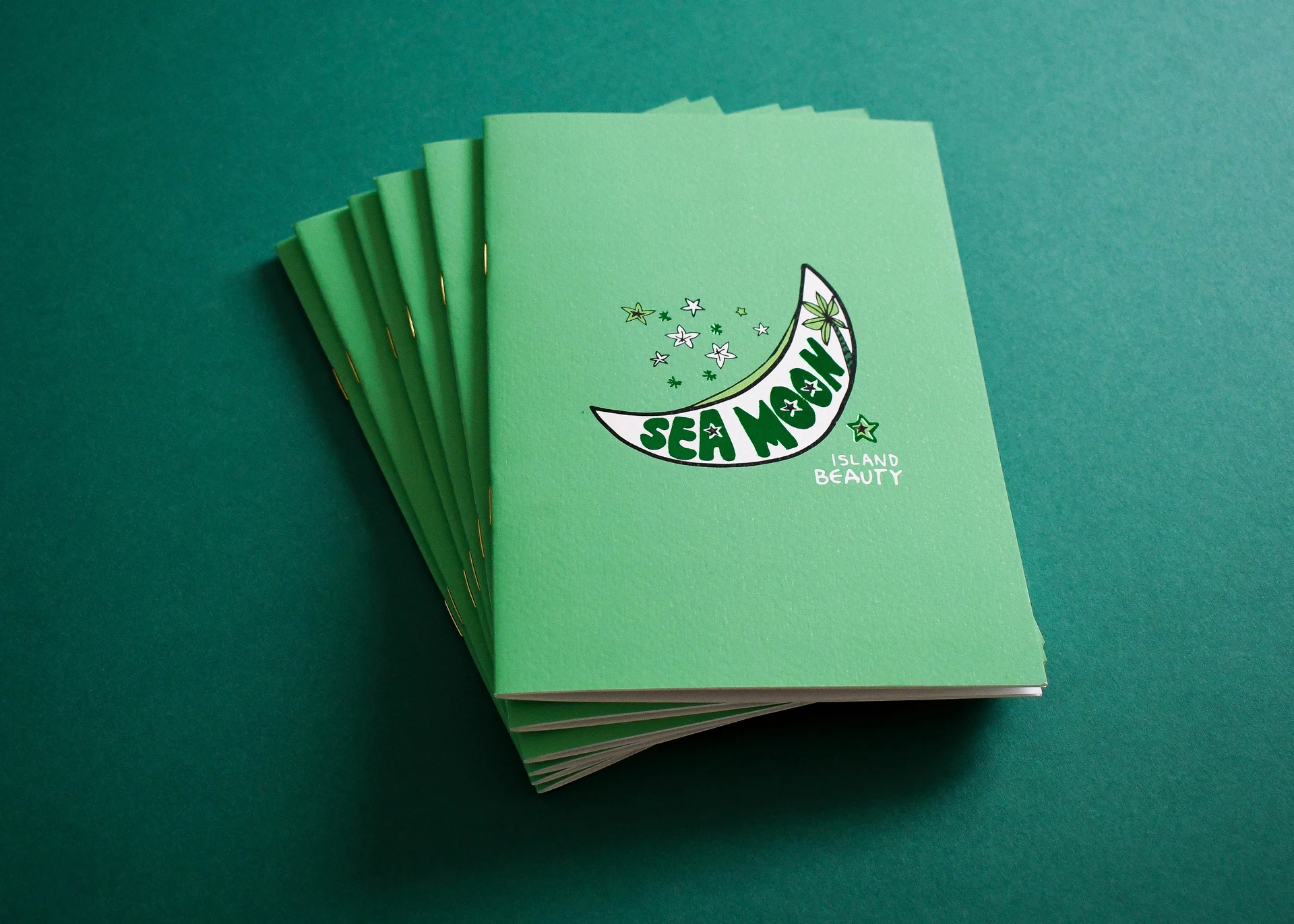
Saddle stitch binding is the simplest and most economical method. Folded sheets are nested inside each other, the cover goes on the outside, and wire staples are stitched through the fold. You will also see it called stapled or FST binding.
It suits brochures, magazines, programmes, reports and booklets. Because every sheet folds to four, a saddle stitched piece is always made up in multiples of four pages, and it uses no glue at all.
When saddle stitching is the right choice
We saddle stitch up to around 80 pages, depending on paper weight. Heavier stock makes the fold thicker, so the practical limit drops as the paper weight goes up.
On thicker saddle stitched work the inner sheets push out slightly further than the outer ones, which is known as creep. Our pre-press studio allows for it at the imposition stage so margins stay even. There is no flat edge to print a title on.
Perfect binding
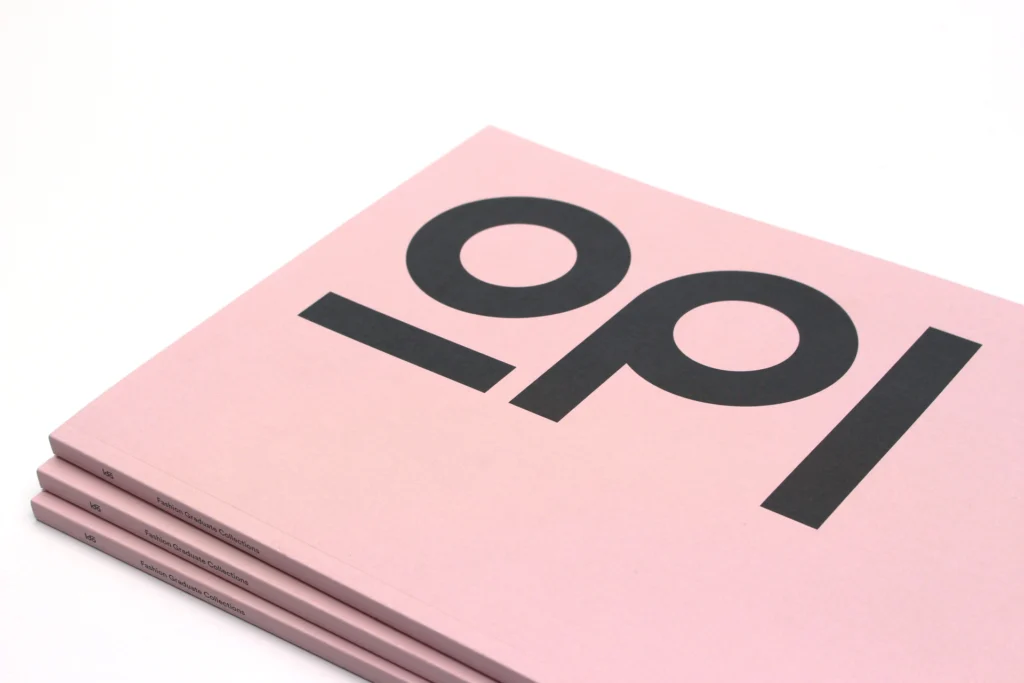
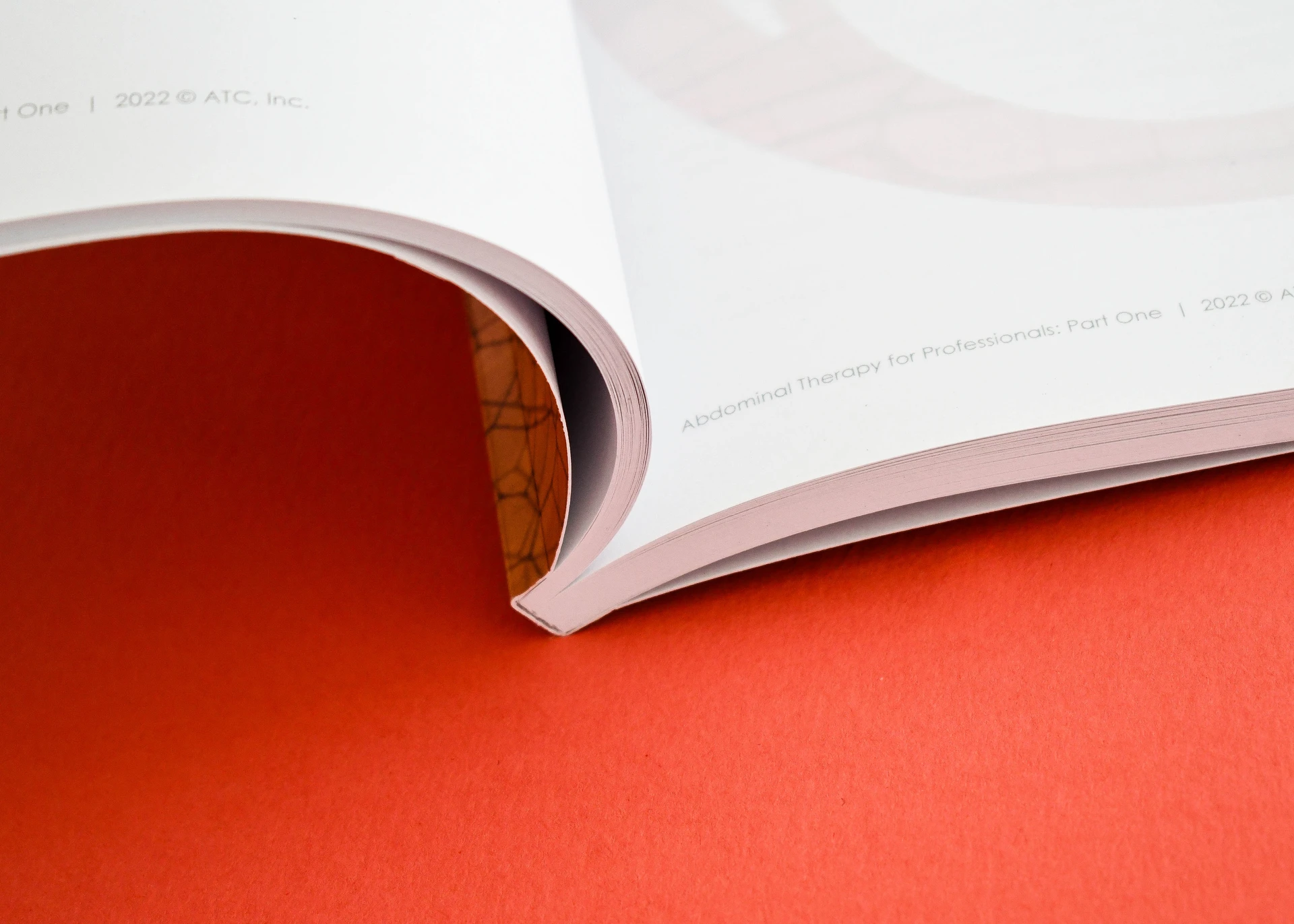
Perfect binding is a type of adhesive binding. The pages are gathered into a book block, the back edge is roughened, and the cover is glued around it to give a squared spine. It is the binding on most paperbacks, catalogues and thicker brochures.
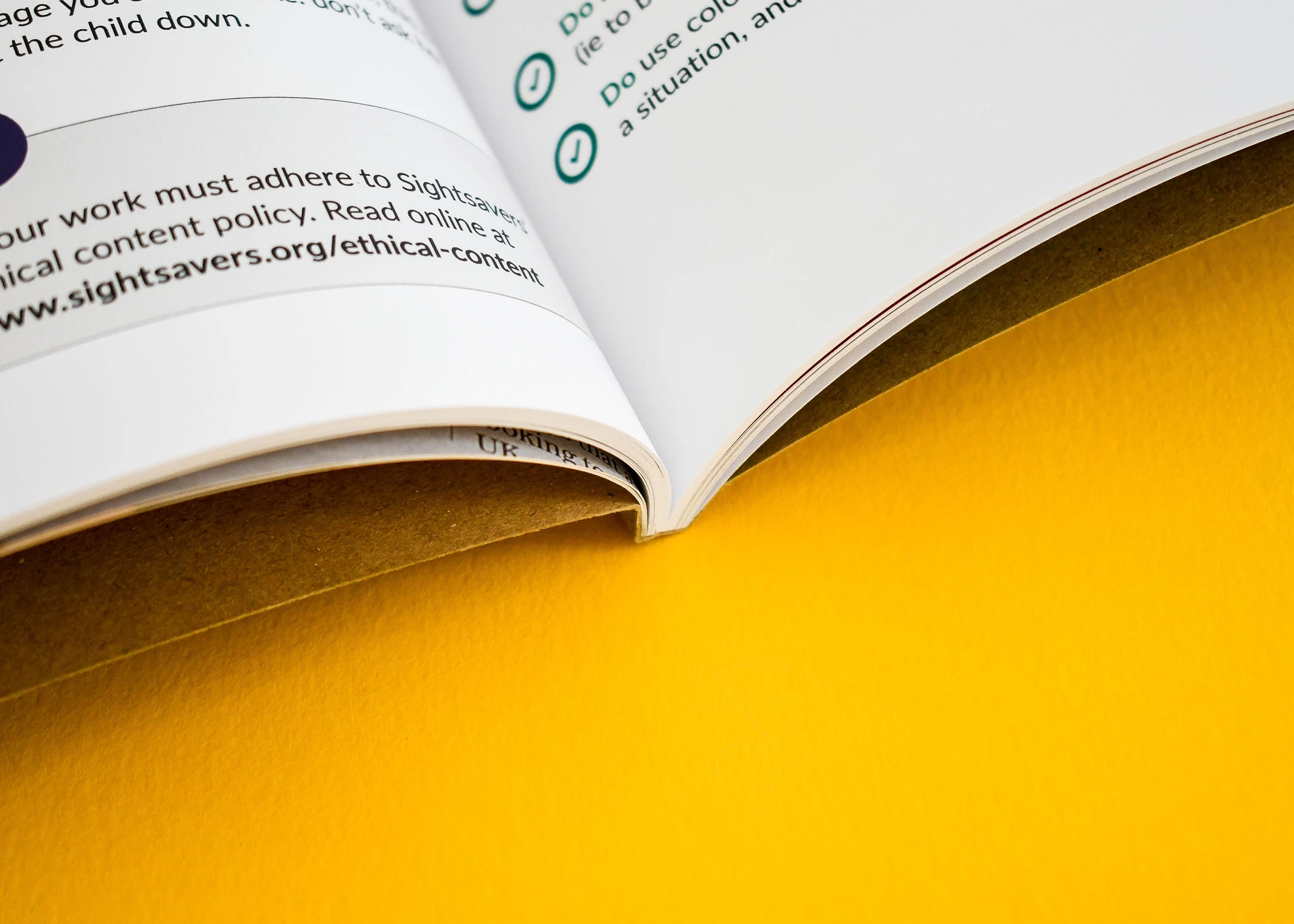
The flat spine can carry a title, which helps on a shelf. It also looks more substantial than a stapled piece at the same page count. The trade-off is that a perfect bound book does not open completely flat.
PUR binding and why the glue matters
There are two main adhesives. EVA is a hot-melt glue that is cheaper but can crack with use and struggles on coated stocks. PUR (polyurethane reactive) cures to a stronger, more flexible bond, holds coated and uncoated paper well, and lets the book open further without leaves coming loose.
We use PUR, and run perfect binding from 2mm to 50mm thick. The width depends on your page count and paper, so our pre-press studio works it out from your specification before the cover artwork is finished.
Saddle stitched or perfect bound?
This is the choice most brochure, catalogue and magazine projects come down to, and the page count usually decides it.
At lower page counts, saddle stitching is usually the better value. As you approach its limit, either can work, and the decision is about the look you want, the paper weight and your budget. Above around 80 pages, or on heavier stock, perfect binding is the right tool.
How the two compare
| Saddle stitched | Perfect bound (PUR) | |
|---|---|---|
| Page count | Up to around 80, in multiples of four | From a 2mm to a 50mm spine |
| Spine | Folded, no printable spine | Squared, can carry a title |
| Opens flat | Close to flat | No |
| Relative cost | Lowest | Low to mid |
| Best for | Brochures, magazines, programmes, reports | Catalogues, paperbacks, thicker brochures, annual reports |
Sewn binding
Sewn binding holds the book together with thread. There are two types worth knowing.
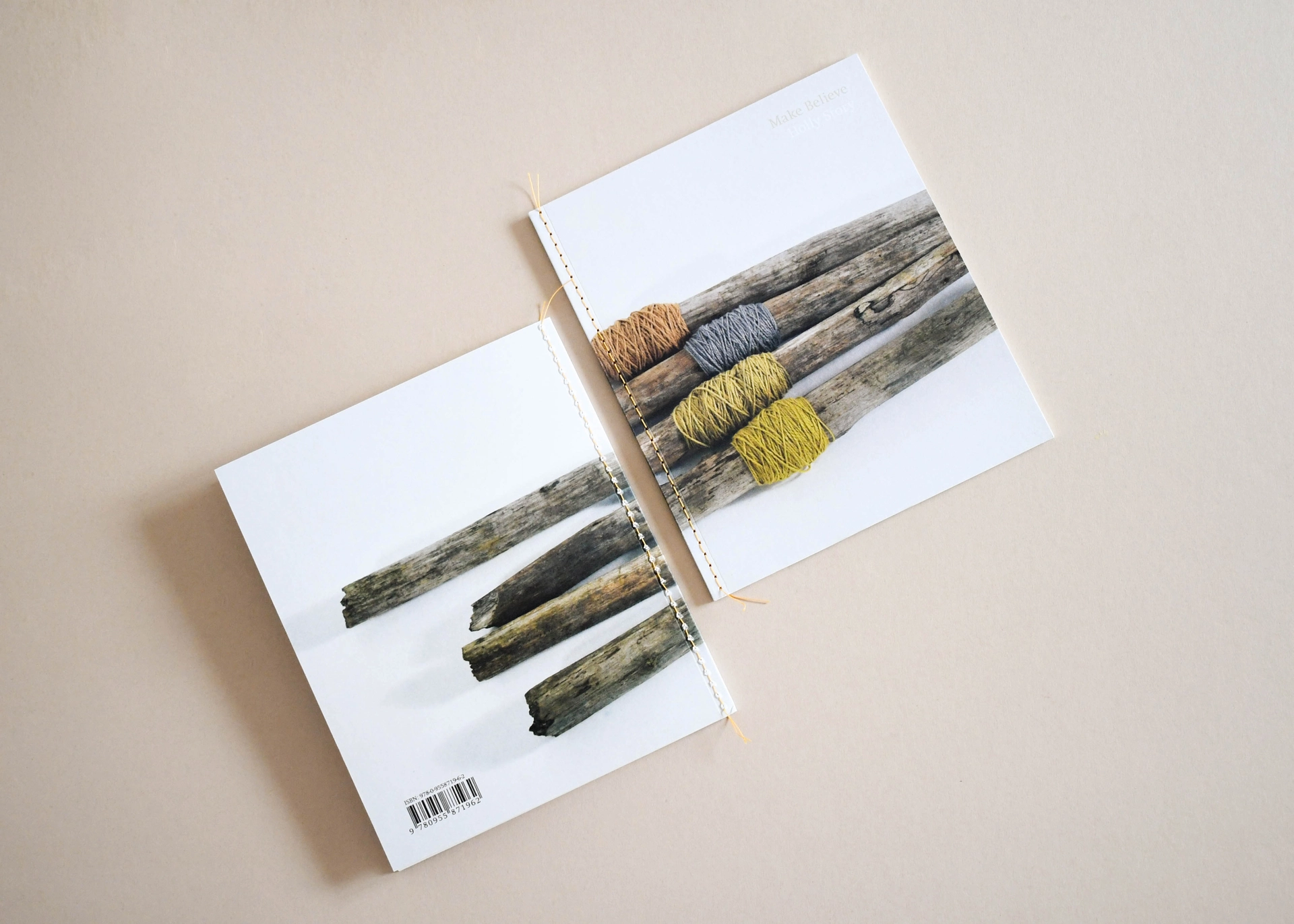
In a thread sewn book, the sheets are folded into sections, also called signatures, and each section is sewn to the next through the fold before the book is glued and covered. It is the strongest construction and opens more easily than a glued book. Singer sewn binding stitches thread through the fold of a single section, which gives a visible stitched spine and a handmade look for limited editions, invitations and short publications.
Is sewn binding worth the extra cost?
Sewing adds time and cost, so it earns its place on books that will be opened many times or kept for years: reference books, cookbooks, premium hardbacks and art books. For a one-off event brochure, the durability is rarely needed.
Talk to us if your project needs it, and we will advise on the best construction for the page count and paper.
Case binding for hardback books
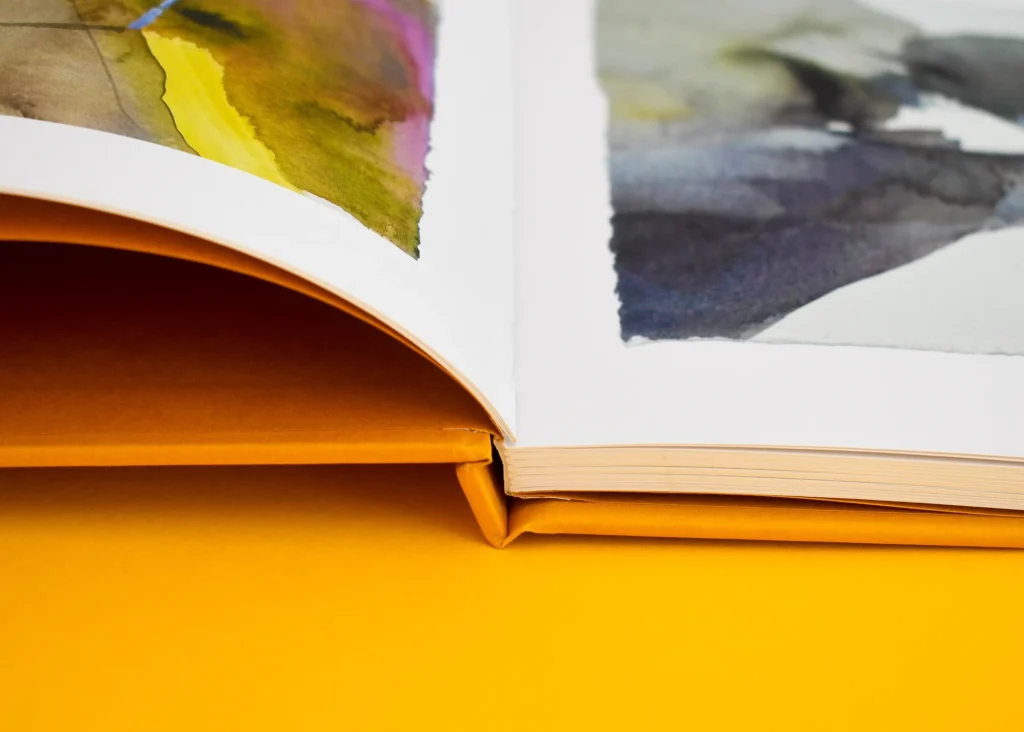
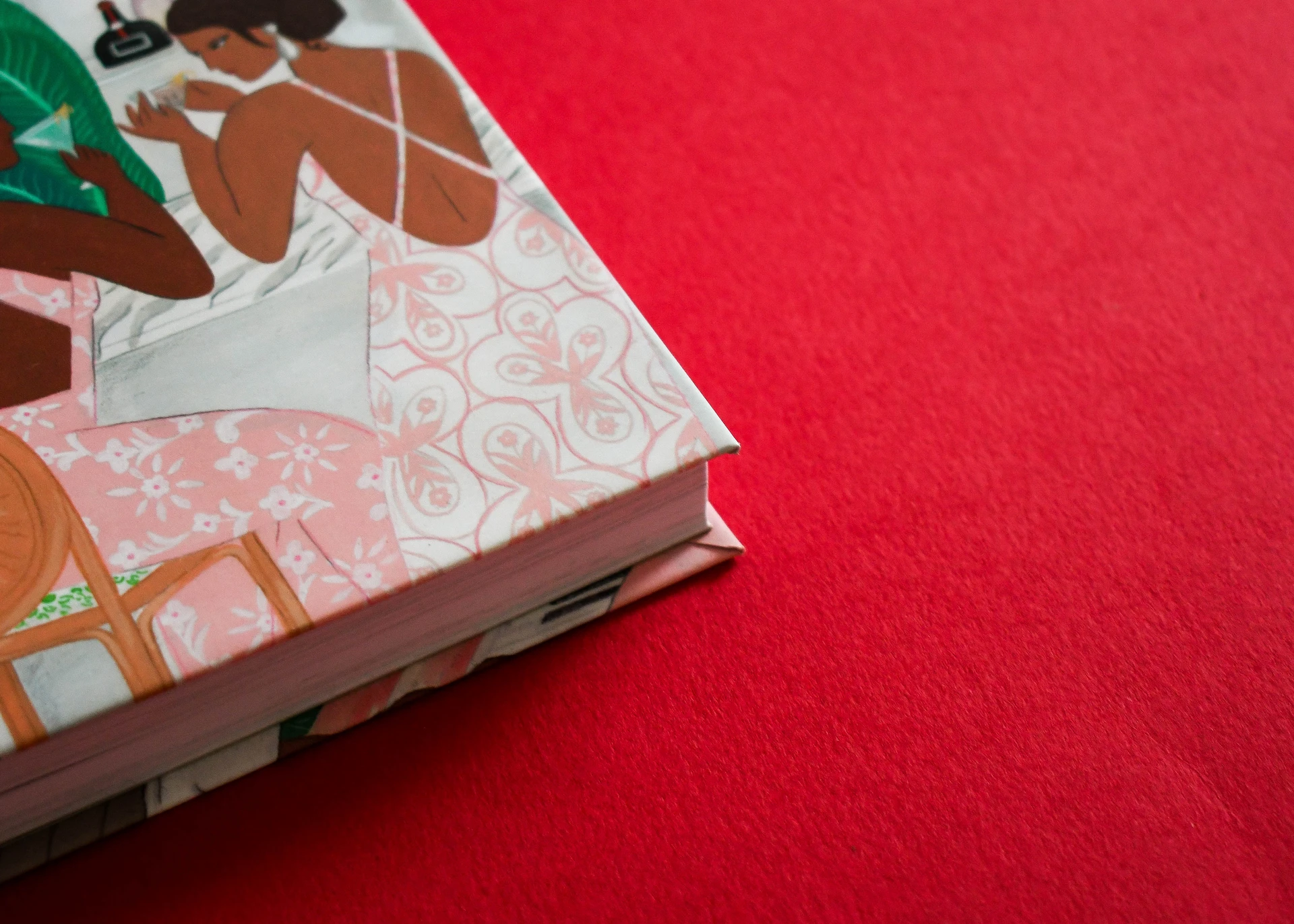
Case binding is how hardback books are made. The sewn or glued pages are attached to a rigid case made from board and wrapped in printed paper, cloth or another material, joined by endpapers at the front and back. A case bound book is the most durable option and has the most weight and presence in the hand.
We produce casebound hardbacks with covers finished in-house, so foiling, embossing and lamination on the case are all handled under one roof. Our guide to print finishes covers those options in detail.
What goes into a casebound book
A casebound book has more parts than a paperback: the text block, endpapers, the boards, the covering material and, on some books, a dust jacket or head and tail bands. Each is a decision about look and cost. Finishes go on before binding, so they need to be specified at the start.
Hardback or paperback?
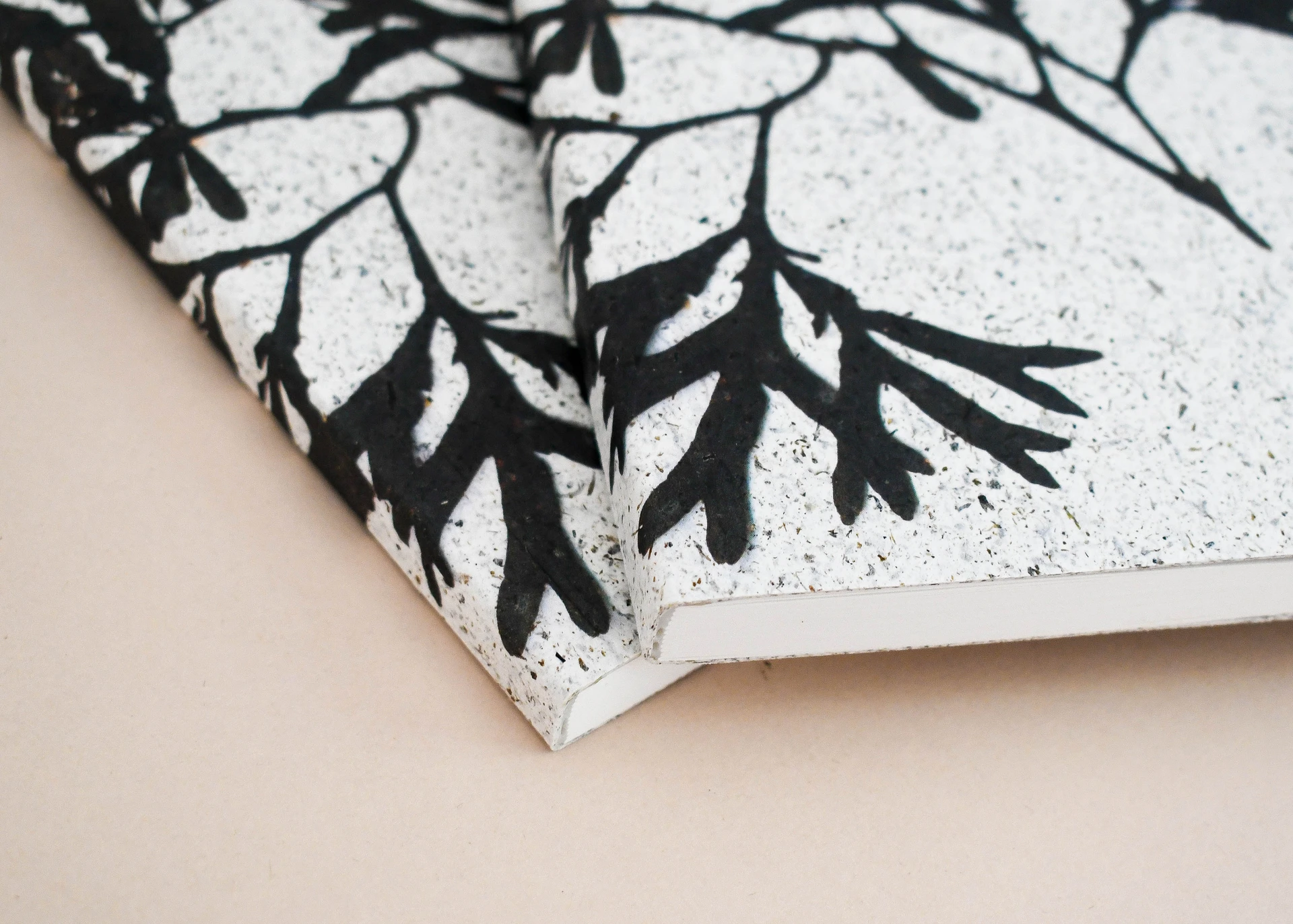
For an author, publisher or organisation printing a book, this is often the first decision. A hardback (or hardcover) costs more per copy and takes longer to produce, because the case is made and attached as a separate stage.
A hardback lasts longer, feels like a keepsake and suits books that will be gifted, displayed or sold at a higher price. A paperback is lighter, cheaper to post and the usual choice for novels, memoirs, guides and larger print runs.
Choosing a format for your print run
Think about who the book is for and how it will be used. A limited edition, a company history or a children’s book intended to last may justify hardback book printing. A book sold through events or by post, or printed in larger quantities, usually works better as a perfect bound paperback.
Some publishers print both: a small hardback run for special editions and a paperback run for wider sale.
Wiro binding
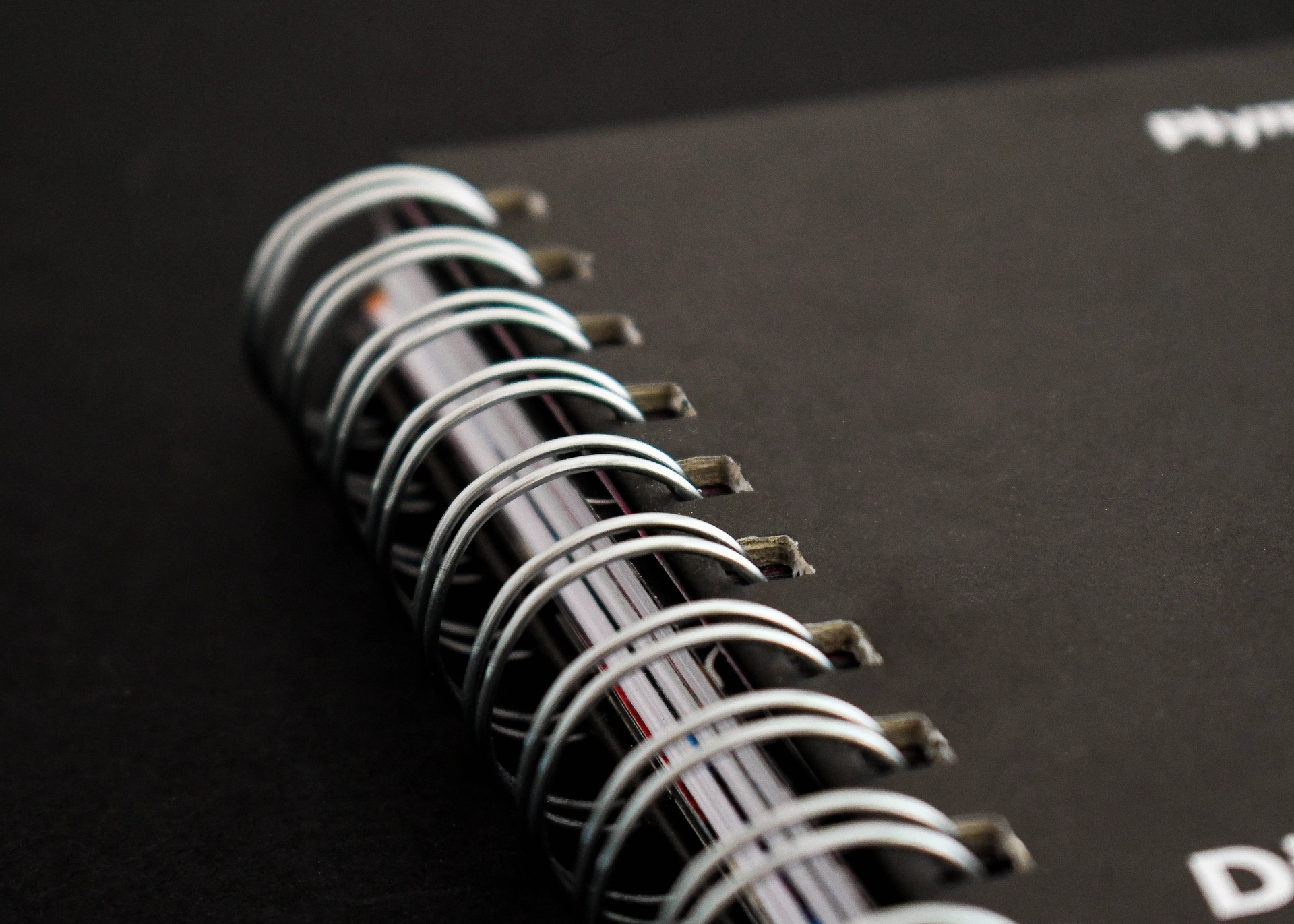
Wiro binding, also called wire-o or wire binding, holds punched pages with a double loop of wire. Each page turns a full 360 degrees and lies completely flat, so it is the binding for calendars, manuals, recipe books, notebooks and presentation documents.
On a desk calendar you can choose the details, such as silver or copper wire and a white or kraft backboard. See our calendar printing page for formats.
Wiro, spiral and comb binding
Spiral (plastic coil) and comb binding look similar but are mostly used for office documents bound in small numbers. For printed work that needs to look finished and stand up to daily use, wiro is the better choice. The wire is exposed, so there is no printed spine to carry a title.
Lay-flat binding
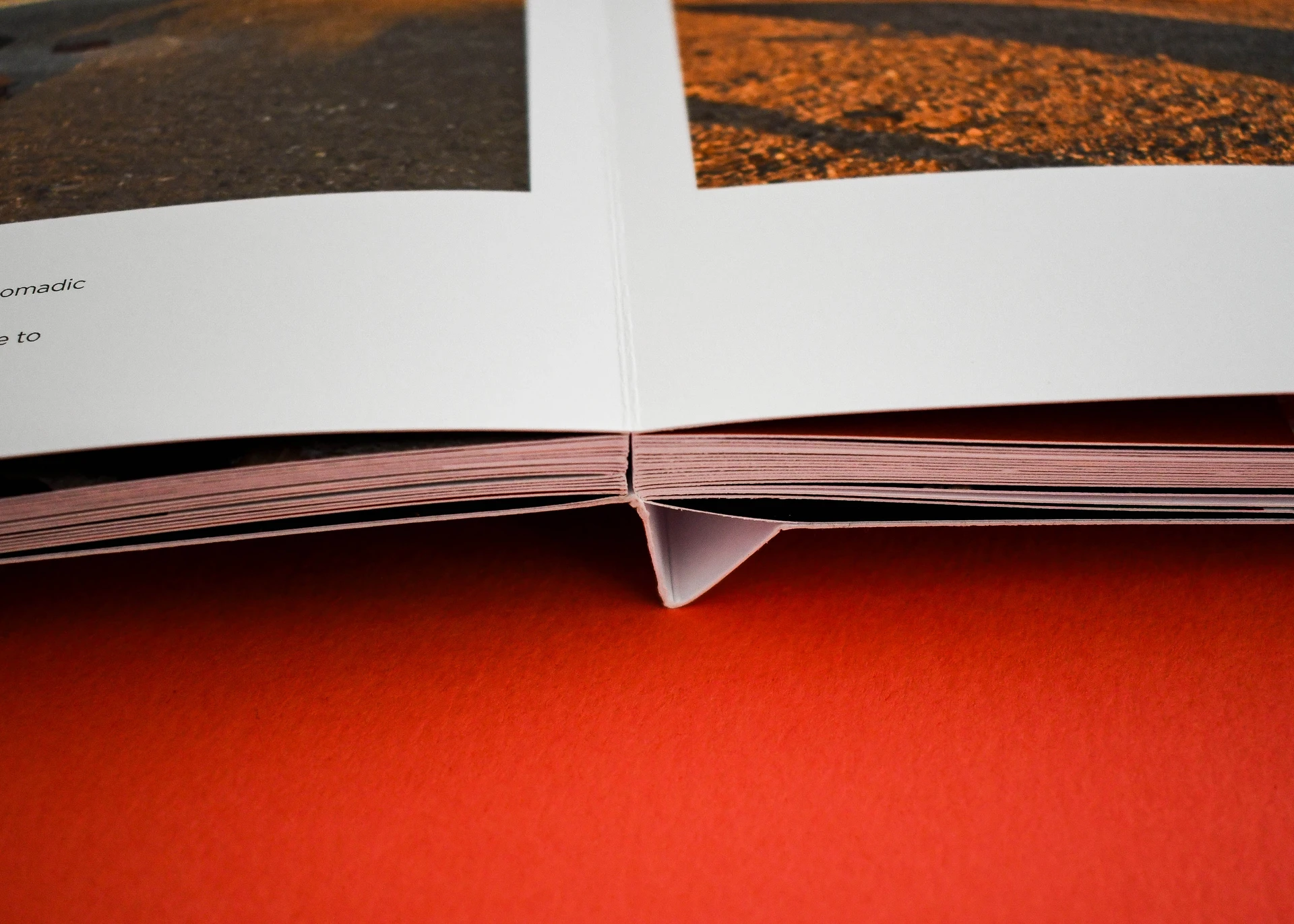
Lay-flat binding lets a bound book open fully flat without wire, so an image can run across a double-page spread without disappearing into the gutter. It suits photography books, portfolios, art books and image-led publications.
We offer lay-flat binding for photography and image-led work where a spread needs to open and lay completely flat.
When a spread needs to open flat
If your design places key images or text across the centre of a spread, lay-flat is worth considering from the start, because it affects how the pages are laid out. If the spreads can keep important content away from the gutter, a PUR perfect bound or sewn book may work well at a lower cost.
Which binding for your book, brochure, catalogue or magazine?
Most commercial print uses one of four methods: saddle stitched, perfect bound, case bound and wiro. The table below is where we would usually start for each type of project, and your page count, paper and budget can change the answer.
You may also have come across hand bindings such as coptic stitch, Japanese stab binding, long stitch and Belgian binding. These are bookbinding craft methods for one-off books, used outside production print, so this guide does not cover them.
Binding by project
| Project | Usual binding | Why |
|---|---|---|
| Brochure printing | Saddle stitched up to around 80 pages; PUR perfect bound above | Economical at lower page counts; a squared spine for thicker brochures |
| Catalogue printing | PUR perfect bound; saddle stitched for slimmer catalogues | A spine that carries the brand and survives repeated use |
| Magazine printing | Saddle stitched; perfect bound for thicker or premium titles | Low cost per copy; perfect binding for a bookshop feel |
| Paperback book | PUR perfect bound | Durable, with a printable spine |
| Hardback book | Case bound | The most durable option, with a premium finish |
| Calendar, manual or recipe book | Wiro | Pages lie flat and turn fully |
| Photography or art book | Lay-flat or case bound | Spreads open without losing images in the gutter |
Next steps
If you are planning a brochure, the binding affects your layout, so read our guide to setting up a brochure for print before artwork is finalised.
If you’re unsure which option is right for your project, give our friendly team a call on 01392 202320 and we will be happy to advise you. Printing, binding and finishing all happen in one building in Exeter, Devon, on FSC® certified paper, and we are a certified Carbon Balanced Printer through the World Land Trust.
Frequently Asked Questions
-
Book binding is the process of fastening printed pages together and attaching them to a cover. In commercial print the main methods are saddle stitching, perfect binding, sewing, case binding and wiro.
-
We saddle stitch up to around 80 pages, depending on paper weight, and heavier paper lowers the limit. Beyond that, perfect binding is usually the better choice.
-
A thread sewn, case bound hardback is the most durable. For paperbacks, PUR perfect binding is considerably stronger than EVA hot-melt glue.
-
Not completely. PUR binding opens further than older glues, but if pages need to lie fully flat, choose wiro or lay-flat binding.
-
The binding method, page count, paper, quantity and any cover finishes all affect the cost. Every project is priced individually, so send us your specification and we will produce a no-obligation quotation.