
Magazine Printing Sustainably Printed in the UK, From Short Runs to High Volume
We print magazines for publishers, membership organisations, councils, schools and businesses across the UK. We print from short runs through to many thousands, and we are happy to advise on the specification before you commit to one.
We are an independent, family-run printer in Exeter, Devon, founded in 1986. Our HP Indigo 7900 digital press, Heidelberg Speedmaster lithographic presses, pre-press studio and bindery are all under one roof, so one team is accountable for your title from artwork through to delivery.
Every magazine is priced individually. Send us your specification and we will produce a no-obligation quotation.


Matt Jones
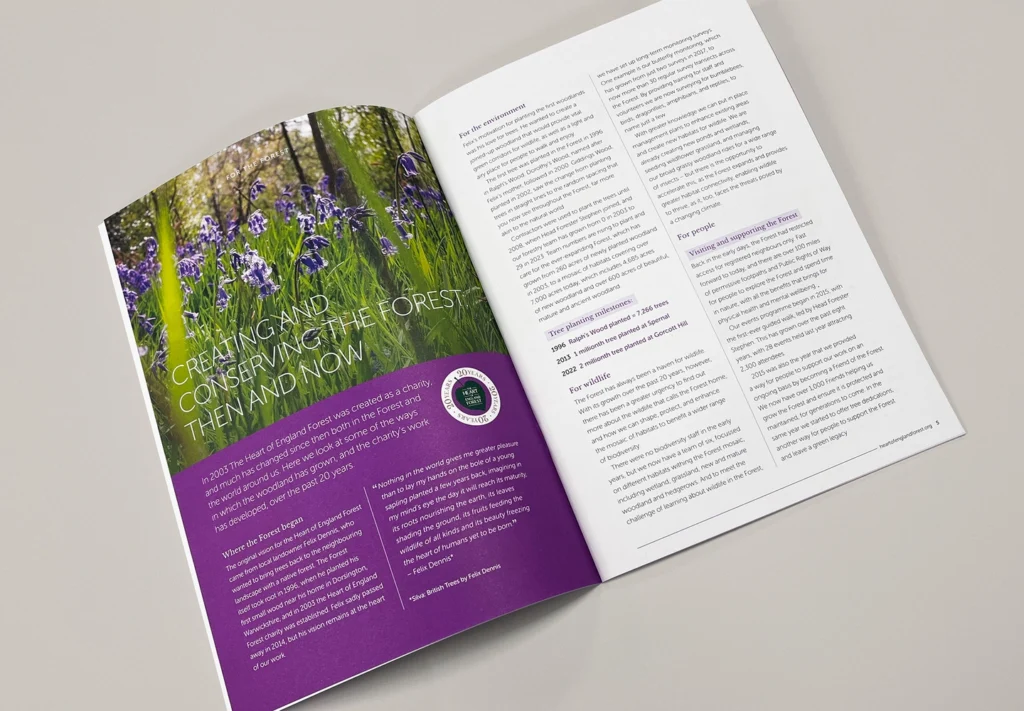
“Ashley House printed our magazine ‘PIVOT’ Dealing with them from start to finish was great, excellent service from Rob who ensured we had everything we needed. The quality of the finished magazine is beyond what we expected, delivery was timely and faster than promised. Would highly recommend.”
Why Choose Ashley House as Your Magazine Printers
We are specialist magazine printers, offering hands-on expertise and support throughout the process. That makes a difference when a cover needs to maintain consistent colour across four issues a year, when the page count is still changing a week before print, or when a mailing deadline simply cannot move.
Because every department is in-house, the person who advises you on the binding works in the same building as the press and the bindery. There is no trade supplier in the middle and no handover where a detail gets lost.
We print member magazines, council publications, society journals, school and university titles, customer magazines and independently published titles. If you’re unsure which option is right for your project, give our friendly team a call on 01392 202320 and we will be happy to advise you.
How We Print Your Magazine
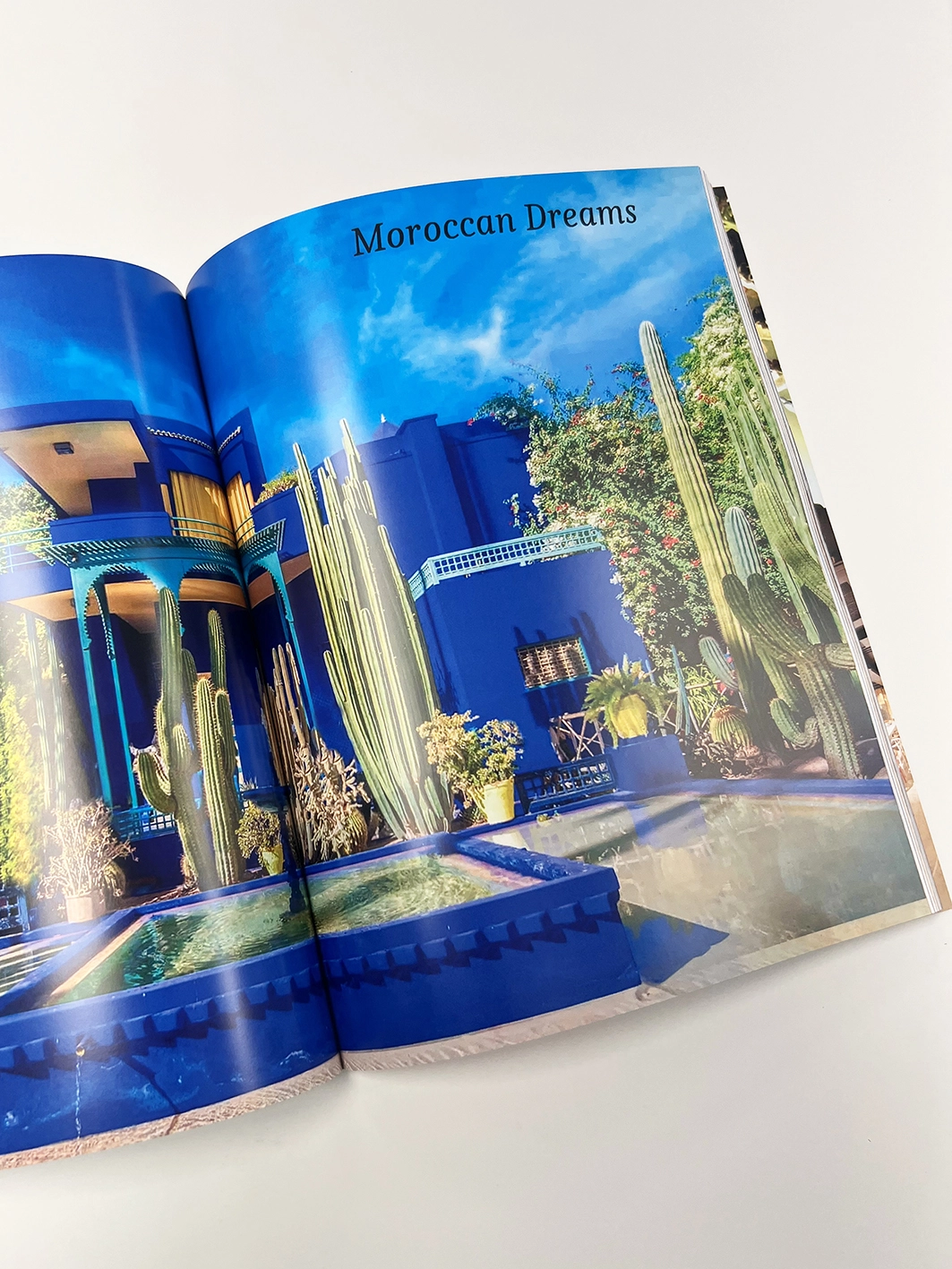
- Send us your specification. The quantity, page count, size, paper and binding, or as much of it as you have so far. We will produce a no-obligation quotation.
- Supply your artwork. A print-ready PDF is preferred, with crop marks, bleed, 300 dpi images and CMYK colour. We also work with InDesign, Illustrator and Photoshop, and we ask for the cover artwork separately from the text pages.
- Pre-press and proof. Our studio checks the artwork and sends a PDF proof for your approval.
- Print. Digital on the HP Indigo 7900 for shorter runs, litho on the Heidelberg Speedmaster for longer ones. The inside pages print as imposed spreads on large sheets and the cover runs separately.
- Finishing and binding. Lamination and any special finishes are applied to the cover, then the sheets are cut, folded, gathered and bound in our bindery.
- Delivery. DPD tracked delivery nationwide, or pallet delivery for larger orders.
Our article on how magazines are printed covers the presses and the process in more depth. If you would like to see the finishing options in person, our print techniques page shows what each one looks like.
Sustainable Magazine Printing
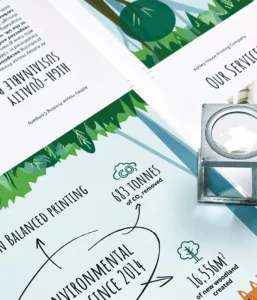
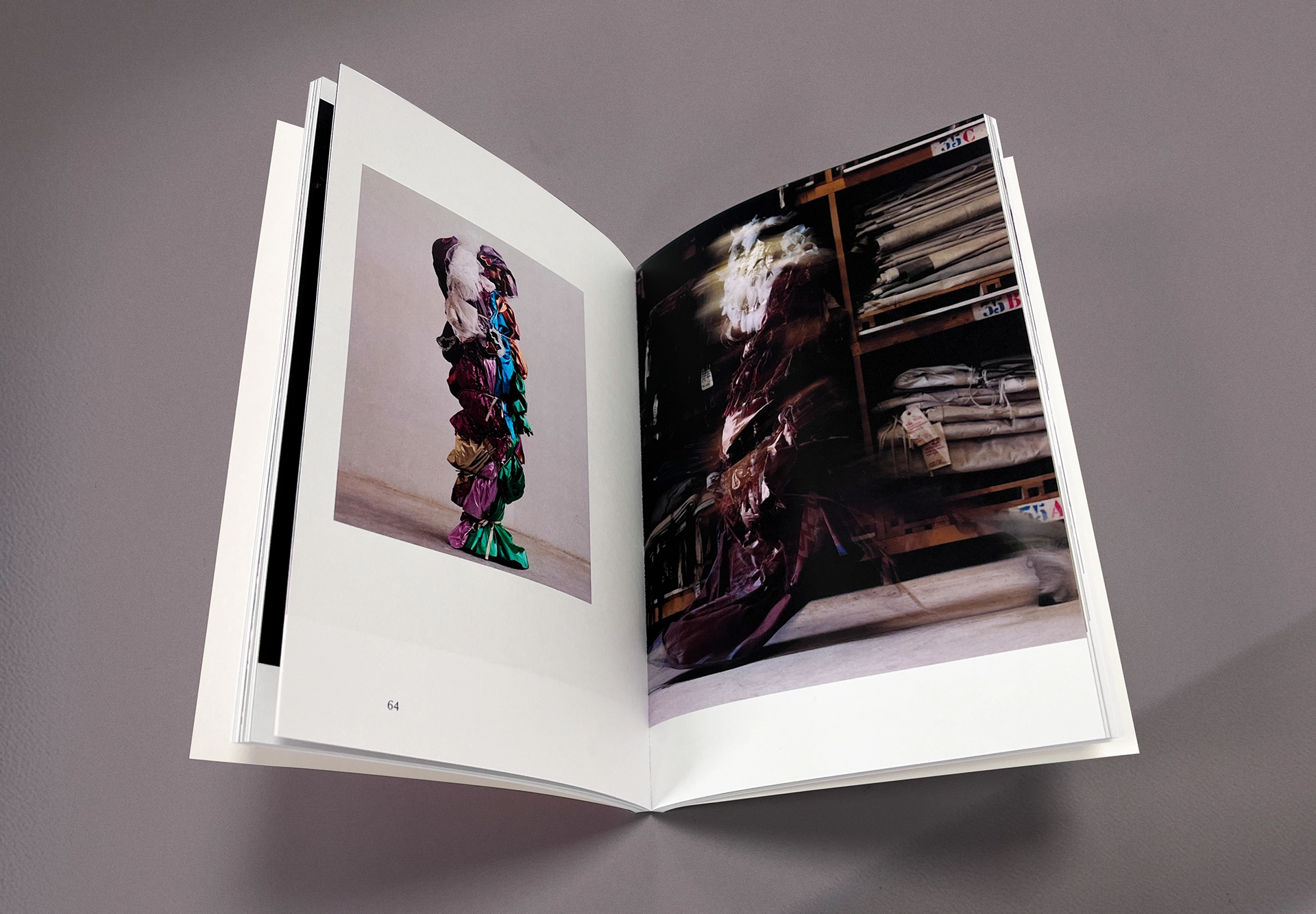
We are a certified Carbon Balanced Printer through the World Land Trust, and carbon balanced paper has been our standard since 2014, at no additional cost to our customers.
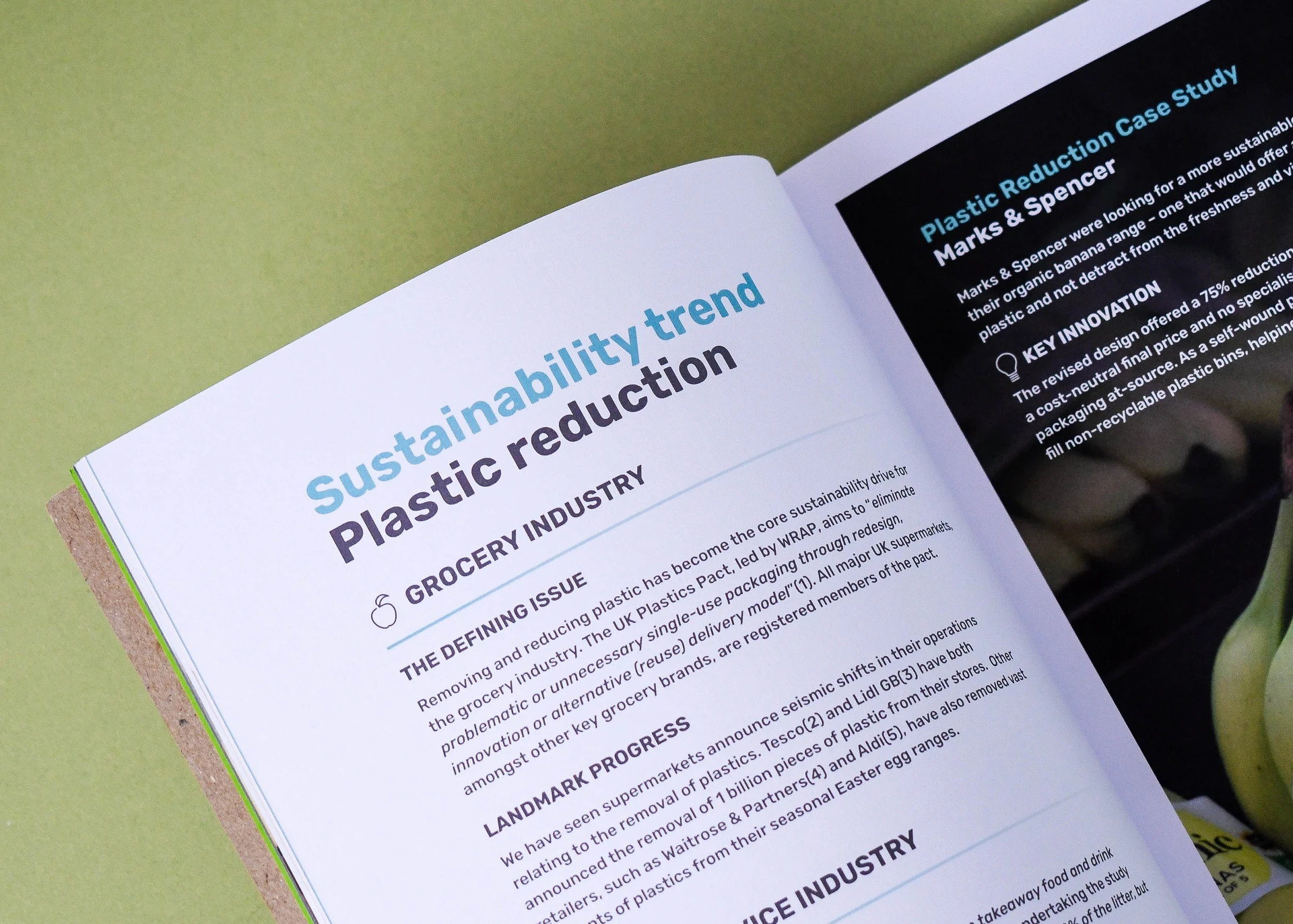
We are FSC® certified, ISO 14001 accredited and Sedex members. We run on 100% green energy, operate a zero landfill policy, use vegetable-based inks and chemistry-free plates, and pack orders without plastic.
For a magazine that carries a sustainability message to its own readers, that chain matters. You can say where the paper came from and what the carbon balancing funds, and point to the certificate behind it. There is more detail on our eco-friendly printing page.
We’re FSC® Certified and ISO 14001 Accredited

Short Run Magazine Printing, from a Single Copy
There is no minimum quantity. We print single copies for proofing, pitching and archive, and short runs for launch issues, membership pilots and self-published titles.
Short runs are printed digitally on our HP Indigo 7900, which is a digital offset press rather than a laser printer. Digital is the economical choice up to around 500 copies, and it means you can order what you need now and reprint later without paying for plates twice.
A short run is also the practical way to test a new title. Print a hundred, put them in front of your readers or your advertisers, then commit to the full quantity once the format is settled.

Bulk and High Volume Magazine Runs
Above around 500 copies, lithographic printing on our Heidelberg Speedmaster presses becomes the better choice. The set-up cost is higher, but the cost per copy falls as the quantity rises, so a bulk run usually works out cheaper per magazine than the same title produced digitally.
All our printing is sheet-fed. The inside pages are imposed and printed on large sheets, then cut and folded, and the cover runs separately on a heavier stock.
Finished magazines go out on DPD tracked delivery, nationwide, and larger orders travel by nationwide pallet delivery. We can also hold stock and despatch in batches through our print fulfilment service, which suits quarterly titles with a mailing list.
Magazine Sizes and Page Counts
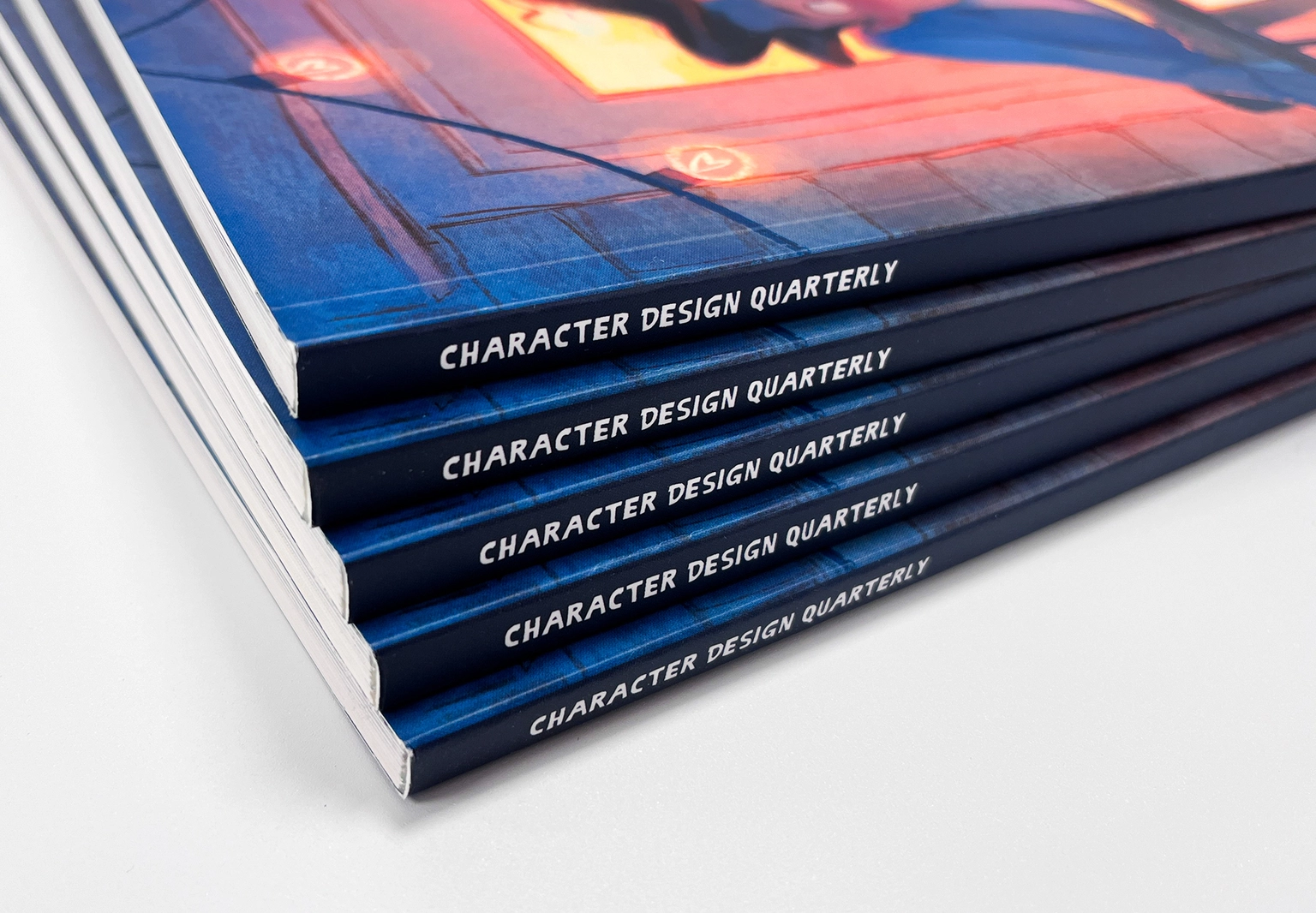
The cost-effective standard sizes are A4, A5, A3 and 210mm x 210mm square. A4 is the default for most member and customer magazines, and A5 suits pocket programmes and listings. A square format creates a more distinctive, considered look and works particularly well for photography.
Magazines are made up in multiples of four pages, because each printed sheet folds to four. Designing to 32, 36 or 40 pages rather than 34 means you are not paying for blank sheets.
Bespoke sizes are possible. They are simply less economical, because a non-standard page size wastes more of the sheet, so it is worth asking us before the design is finalised rather than after.

Paper Stocks, Finishes and Coatings for Magazines
A magazine usually uses a heavier cover stock and a lighter text stock, unless it is self-cover, where the same weight runs throughout. Getting that pairing right is most of the difference between a title that feels substantial and one that feels thin.
Uncoated stock is a popular choice, warmer to handle and easier to write on, and it is now used on around 75% of the brochures we produce. Coated stock, silk or gloss, is the traditional choice for image-led work. Recycled stock comes in both, and bespoke projects can be produced on a wide range of designer papers and heavier stocks.
All the paper we use is FSC® certified and responsibly sourced.
For coatings and finishing we offer matt, gloss and soft touch lamination, spot UV varnish, foiling and embossing, usually on the front cover and the back cover. Finishes are applied to the cover sheets before binding, not after, which is why a late change to the cover design costs more than a late change to an inside page.
Our HP Indigo 7900 has the heavy substrate kit fitted and prints coated, uncoated and recycled stocks at approximately 400gsm, or up to 550 microns, so a heavy board cover is not a problem even on a short run.
Magazine Binding Options: Saddle Stitching, Perfect Bound, PUR and Wiro
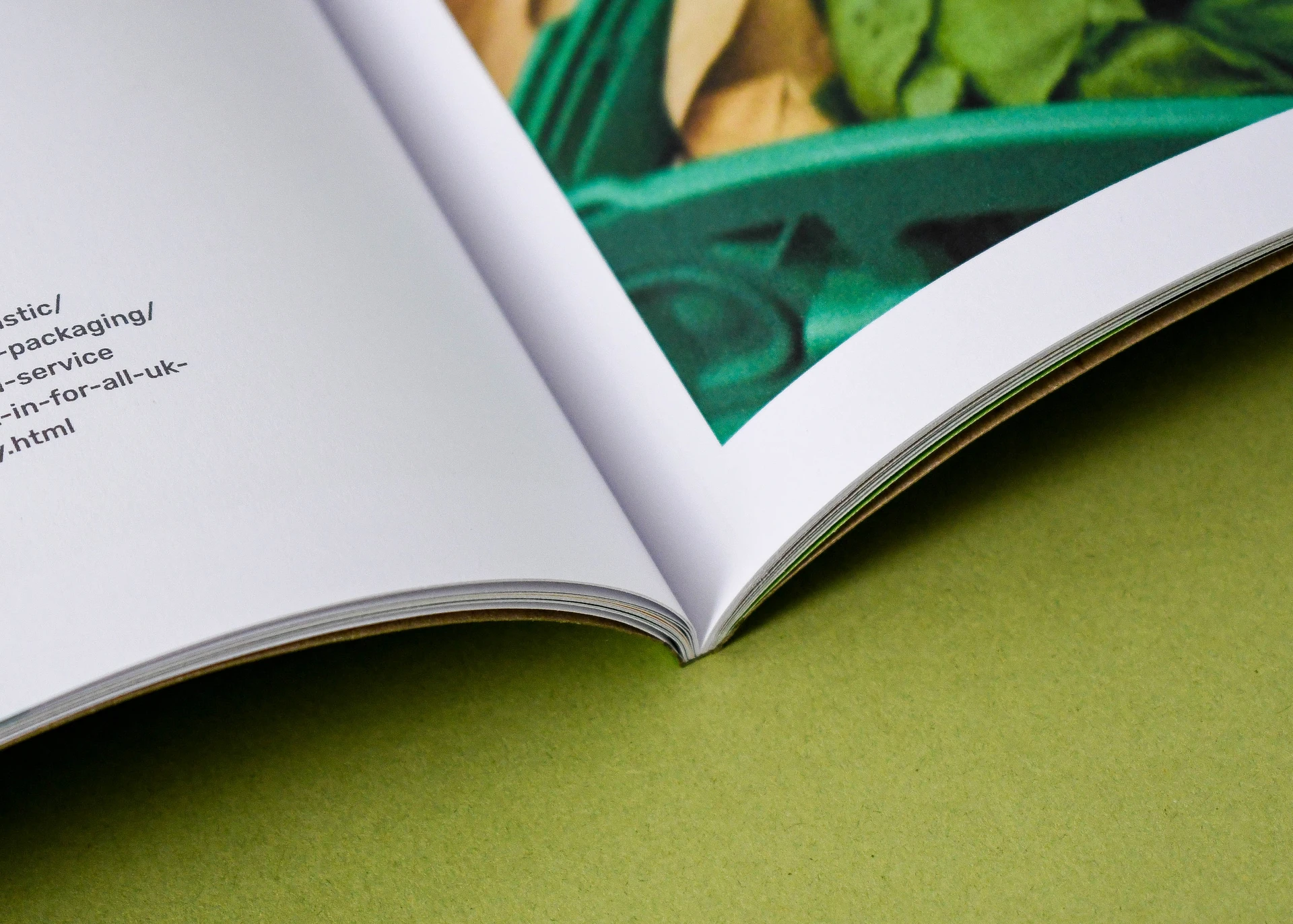
Most magazine specifications come down to a page-count decision. Saddle stitching is right up to a point, and past that point the spine needs to be glued.
If you’re unsure which option is right for your project, tell us the page count and how the magazine will be used, and we will recommend one.
| Binding | Page count / spine | Best for |
|---|---|---|
| Saddle stitched (FST) | Up to around 80 pages, depending on paper weight | Most titles; the most economical and quickest option, no flat spine |
| Perfect bound (PUR) | Spines from 2mm to 50mm | A flat, printable spine, for a shelf or a members’ library |
| Wiro bound | Silver or copper wire, white or kraft backboard | Directories, reference titles and anything used open on a desk |
| Singer sewn | Stitched through the spine with visible thread | Slim, design-led titles and limited editions |
High Quality, Bespoke and Custom Magazine Specifications
Every magazine we produce is a custom specification, and there is no published price list. The quantity, page count, format, paper, binding and finishing all move the figure.
Our in-house graphic design department can take a title from layout to press, or work alongside your own designer. Our pre-press studio checks your artwork before anything is made ready, and we will send a proof for approval so you can see the colour and the imposition before the run starts.
Colour consistency matters most on a title that runs several times a year, and it is the reason we keep proofing, printing and finishing in the same building. See some of the brands we work with here.
What affects the cost of printing a magazine
- Quantity. The cost per copy falls as the print run increases.
- Page count. Keeping the page count in multiples of four is more cost-effective, so a 36-page publication will cost less than a 38-page one that needs to be produced as 40 pages.
- Format. A standard size uses the sheet efficiently, a bespoke size does not.
- Paper. Weight, coating, and whether the cover is a separate, heavier stock.
- Binding and finishing. Saddle stitching is the most economical, and lamination, spot UV and foiling each add a pass.
- Turnaround and delivery. A standard turnaround costs less than a rush.
Our guide to how much it costs to print a magazine works through each of these in more detail. For your own title, send us your specification and we will price it individually.
“
Frequently Asked Questions
-
Up to around 80 pages, depending on the paper weight. Heavier stock bulks out the spine and the fold stops sitting flat, so a thick 80-page title is often better perfect bound. Past that point, PUR binding is the right answer.
-
No. We print from a single copy upwards. Short runs go on our HP Indigo 7900, which is economical up to around 500 copies, and longer runs move to litho.
-
Turnaround depends on the quantity, binding and finishing. Tell us your mailing date when you send your specification and we will confirm the schedule.
-
Yes. We are based in Exeter, Devon, and deliver nationwide by DPD tracked delivery, with pallet delivery for larger orders.
-
A print-ready PDF with crop marks, bleed, 300 dpi images and CMYK colour, and the cover artwork supplied separately from the text pages. Remember that the page count needs to be a multiple of four. If you work in InDesign, Illustrator or Photoshop, we can take those working files instead.
-
There is no single figure, because the quantity, page count, format, paper and binding all change it, and the cost per copy falls as the print run increases. Our cost guide explains where the genuine savings are, and we will price your own specification individually.
-
Send us the specification and your artwork, approve the PDF proof, and we take care of the rest. Our guide to how magazines are printed explains what happens on the press if you would like the detail first.
-
Yes, in both coated and uncoated finishes. All our paper is FSC® certified and carbon balanced as standard, so recycled stock is an option you can choose rather than a requirement for an environmentally sound magazine.
Some of the amazing companies we work with


We’re here to help.
Have a question about magazine printing?
Our team are based here, in-house, in our Exeter studio Mon-Fri 8am to 5:30pm.