



What is Eco-Friendly Printing? Your Guide to Sustainable Print
Eco-friendly printing is a comprehensive method of print production that includes a series of intentional choices and verifiable processes designed to minimise negative impacts on the environment. This practice integrates sustainable materials, low-impact technologies, and responsible business operations, moving far beyond simply using recycled paper.
The Core Components of Green Printing
Genuine sustainable printing begins long before ink touches paper. It’s a commitment that runs through every stage of the print process, backed by certifications, accreditations and a verifiable supply chain. The primary components that define eco-friendly printing are the materials used, from the paper stocks to the inks or toners.
Sustainable Paper and Print Stocks: Beyond Just ‘Recycled’
The choice of paper is the most critical starting point for any green print project. While “recycled” is a common term, an expert approach involves a deeper understanding of material sourcing, including where it comes from and how it’s been produced.
FSC-Certified Paper
The FSC (Forest Stewardship Council) is the global gold standard for responsible forest management.
- What it is: The FSC logo guarantees that the paper (or the virgin pulp used in it) comes from a forest that is managed to preserve biological diversity and benefit the lives of local people and workers.
- Why it matters: It provides a verifiable chain of custody from the forest to the printer. Choosing an FSC-certified printer ensures that all paper used is traceable and supports responsible forestry, rather than contributing to deforestation.
Recycled Paper
Understanding the nuances of recycled paper is key to demonstrating true expertise. Not all recycled content is equal.
- Post-Consumer Recycled (PCR): This is the most environmentally friendly option. PCR content is made from paper that has been used by an end-consumer, discarded, and recovered (e.g., office paper, old mail). Its use significantly reduces landfill waste and the demand for virgin pulp.
- Pre-Consumer Recycled: This material is recovered from the manufacturing process before it ever reaches a consumer (e.g., paper mill scraps, offcuts). While still beneficial, it does not have the same circular-economy impact as PCR paper.
Alternative and Tree-Free Fibres
For specific products like high-end business cards or art prints, a growing number of innovative, tree-free stocks are available.
- Cotton: Often made from 100% recycled cotton linters (the fuzz from the seed) or even offcuts from the textile industry.
- Bamboo and Hemp: These are fast-growing, renewable resources that require less land and water than traditional wood pulp.
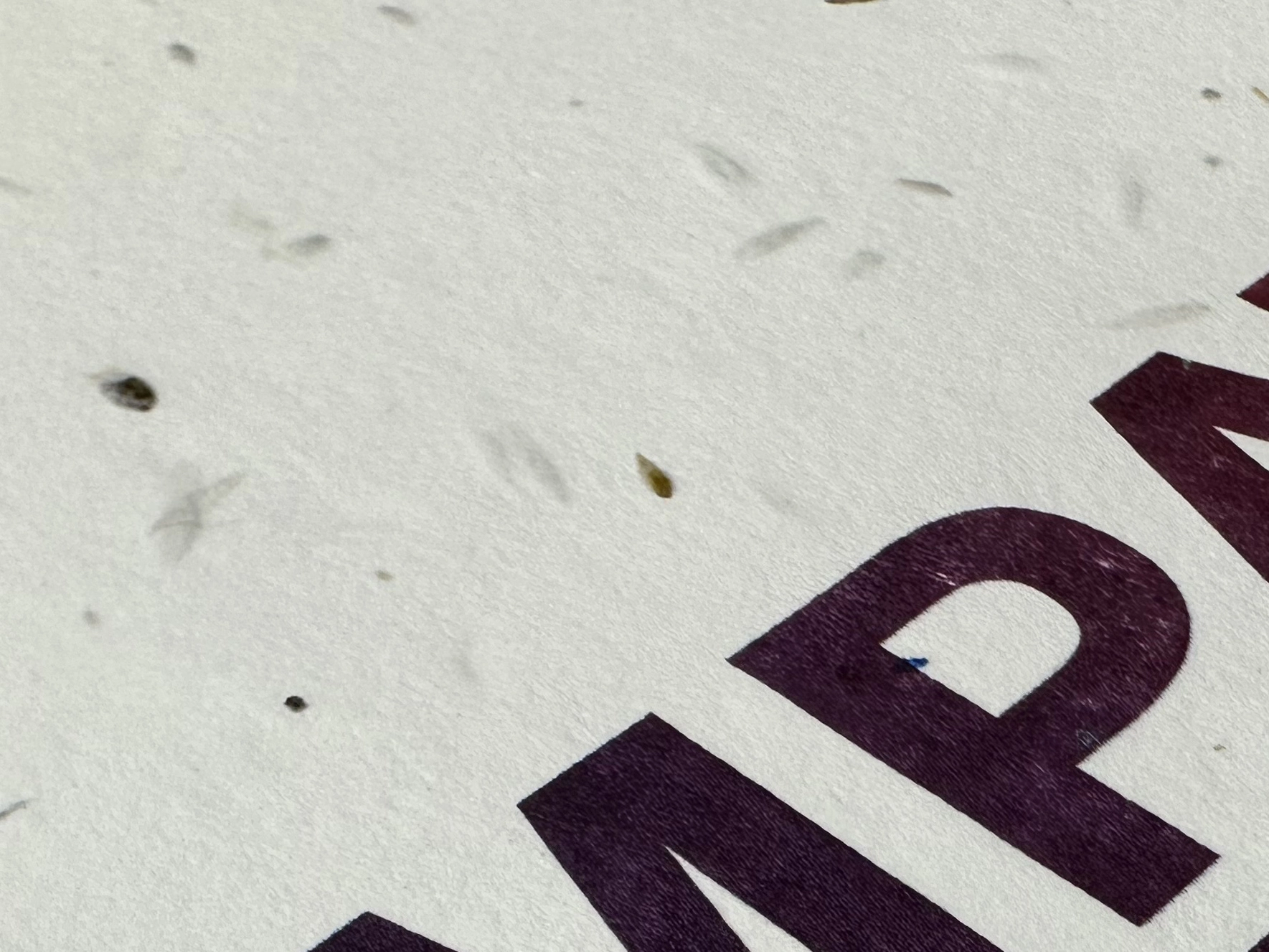
- Seed Paper: A specialty paper embedded with seeds. After its use, the paper can be planted to grow flowers, herbs, or vegetables, leaving no waste behind.
- Sugarcane (Bagasse): This paper is made from the fibrous residue left over after sugarcane is crushed for its juice. It is a reclaimed agricultural by product.
- There is even paper made from elephant poo and recycled coffee cups!
Eco-Friendly Ink and Toners: What to Look For (and What to Avoid)
The liquid component of printing can be a source of environmental pollutants. Sustainable printing prioritises eco-friendly ink that is non-toxic and has a low environmental impact.
Vegetable-Based Inks
These are the industry standard for high-quality, eco-friendly lithographic printing.
- What they are: Unlike traditional inks that use a petroleum-based solvent, these inks use renewable vegetable oils as the carrier.
- Why they matter: Their primary benefit is the significant reduction in Volatile Organic Compounds (VOCs). VOCs are harmful chemical emissions that contribute to air pollution. Vegetable-based inks are also easier to de-ink during the paper recycling process.
Water-Based Inks
These are the leading eco-friendly solution for large format printing (like banners and signage) and digital wallpaper printing.
- What they are: As the name suggests, the ink’s carrier is primarily water, rather than harsh chemical solvents.
- Why they matter: They are non-toxic, odourless, and release significantly fewer VOCs, making them safe for indoor use and better for the print technicians operating the machinery.
The Problem with PVC Inks (Plastisol)
A critical consideration, particularly for screen printing, is the avoidance of inks containing Polyvinyl Chloride (PVC).
- The Problem: Standard screen printing often uses “plastisol” inks, which are liquid PVC. This requires additives, including phthalates (as plasticisers) and heavy metal stabilisers.
- The Harm: These additives can leach out. Phthalates are widely suspected to be endocrine disruptors and potential carcinogens, posing a direct health risk.
- The Solution: Verifiable eco-friendly printers use PVC-free inks. These are reliable, high-performance alternatives that provide excellent print quality without the associated health and environmental hazards.
For most client projects, the choice of ink is not made in isolation. It is considered alongside paper stock, finishing requirements and print process to ensure the most sustainable option is used without affecting colour consistency or durability.
We can also advise on vegan-friendly print options where this matters to the brand or campaign. This usually means looking at the full specification, including responsibly sourced materials, vegetable-based inks and production methods that support the client’s environmental values.
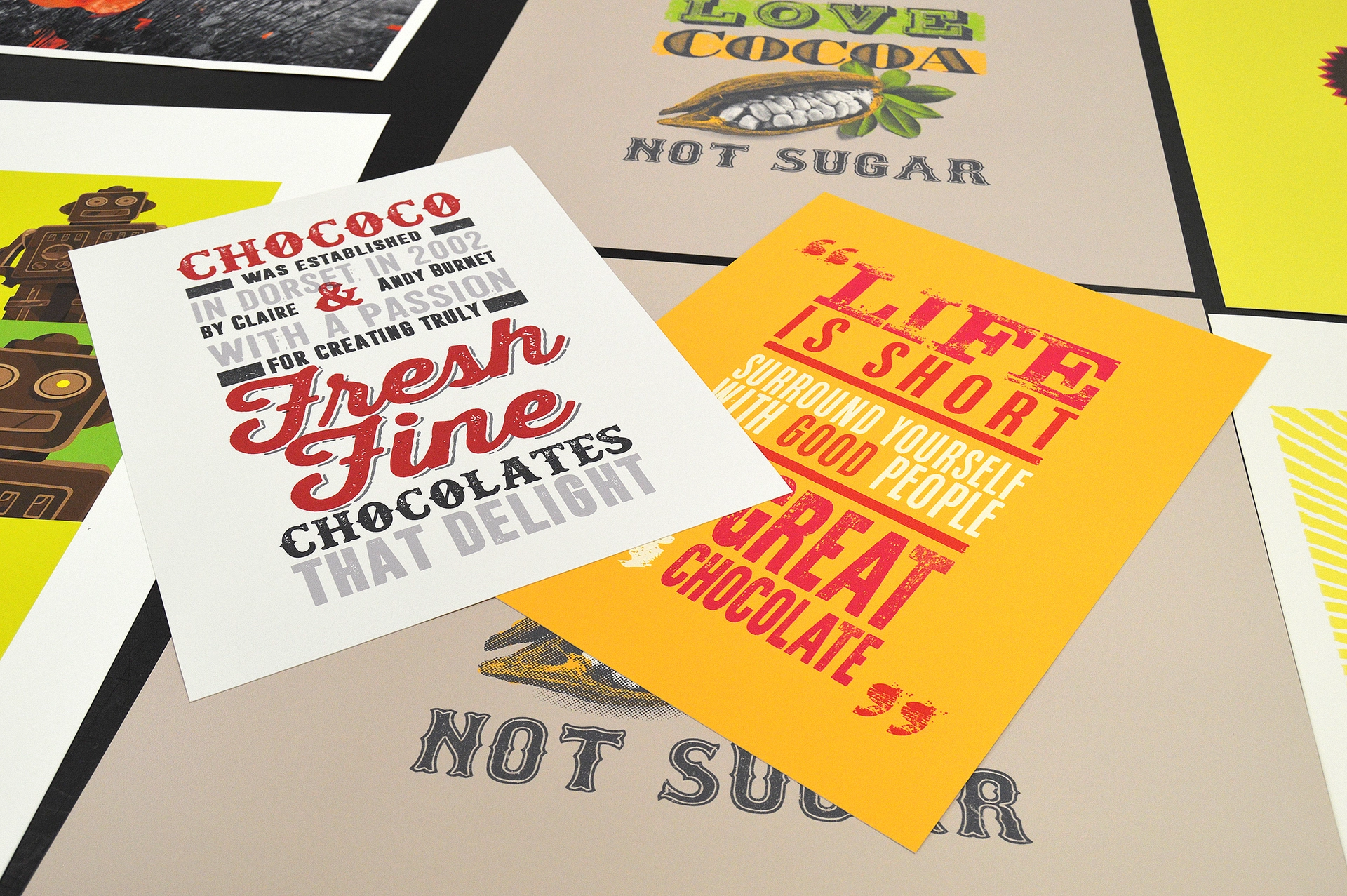
Why Eco-Friendly Printing? The Brand Benefits You Shouldn’t Ignore
Adopting a sustainable print policy is not just an environmental obligation; it is a powerful business strategy in the modern UK market. The benefits extend directly to brand perception, customer loyalty, and financial health.
1. Align with Consumer Values and Build Brand Trust
Today’s consumers are increasingly making purchasing decisions based on a brand’s values. Globally, over 50% of consumers are willing to pay more for brands that are committed to positive social and environmental impact.
- Demonstrating Commitment: Choosing sustainable print is a tangible, physical way to demonstrate that a business is thinking about the planet and is committed to reducing waste.
- Building Trust: When a brand showcases its commitment to responsible practices – such as by using the FSC logo or recycled symbol on its materials – it establishes itself as authentic and forward-thinking, building trust and credibility.
2. Why Should Small Businesses Care About Sustainable Printing?
For small and medium-sized enterprises (SMEs), sustainability is not a luxury; it is a vital competitive advantage.
- Create a Unique Selling Point (USP): In a crowded marketplace, sustainability can be the key differentiator that resonates with eco-conscious customers.
- Drive Growth and Savings: Research indicates that sustainable brands grow faster than their non-sustainable competitors. Furthermore, sustainable practices are, by definition, efficient. A common misconception is that eco printing costs more. Efficiency gains from modern processes and reduced waste can often make it a highly cost-effective choice.
3. Future-Proof Your Brand with Sustainable Print
Sustainability is not a passing trend; it is a fundamental shift in the global and local economy.
- Regulatory Alignment: UK government regulations are increasingly targeting single-use items and promoting the “circular economy”. Businesses that proactively adopt sustainable print practices position themselves ahead of future requirements.
- Long-Term Investment: Making the switch to sustainable print is a long-term investment in a brand’s relevance and future viability.
4. Sustainable Print Solutions for Charities and Non-Profits
For the third sector, this issue is paramount. A non-profit’s mission is values-based, and its operational choices must reflect that.
- Mission Alignment: Using eco-friendly print materials reinforces an organisation’s ethical message to donors and supporters. It shows they are responsible stewards of their resources in all aspects of their operation.
- Balancing Budget and Values: Charities and non-profits must maximise the impact of every pound. Sustainable solutions do not have to be more expensive. By working with a print partner that offers efficient print management and recycled paper options, organisations can achieve high-quality, mission-aligned materials that respect their budget.
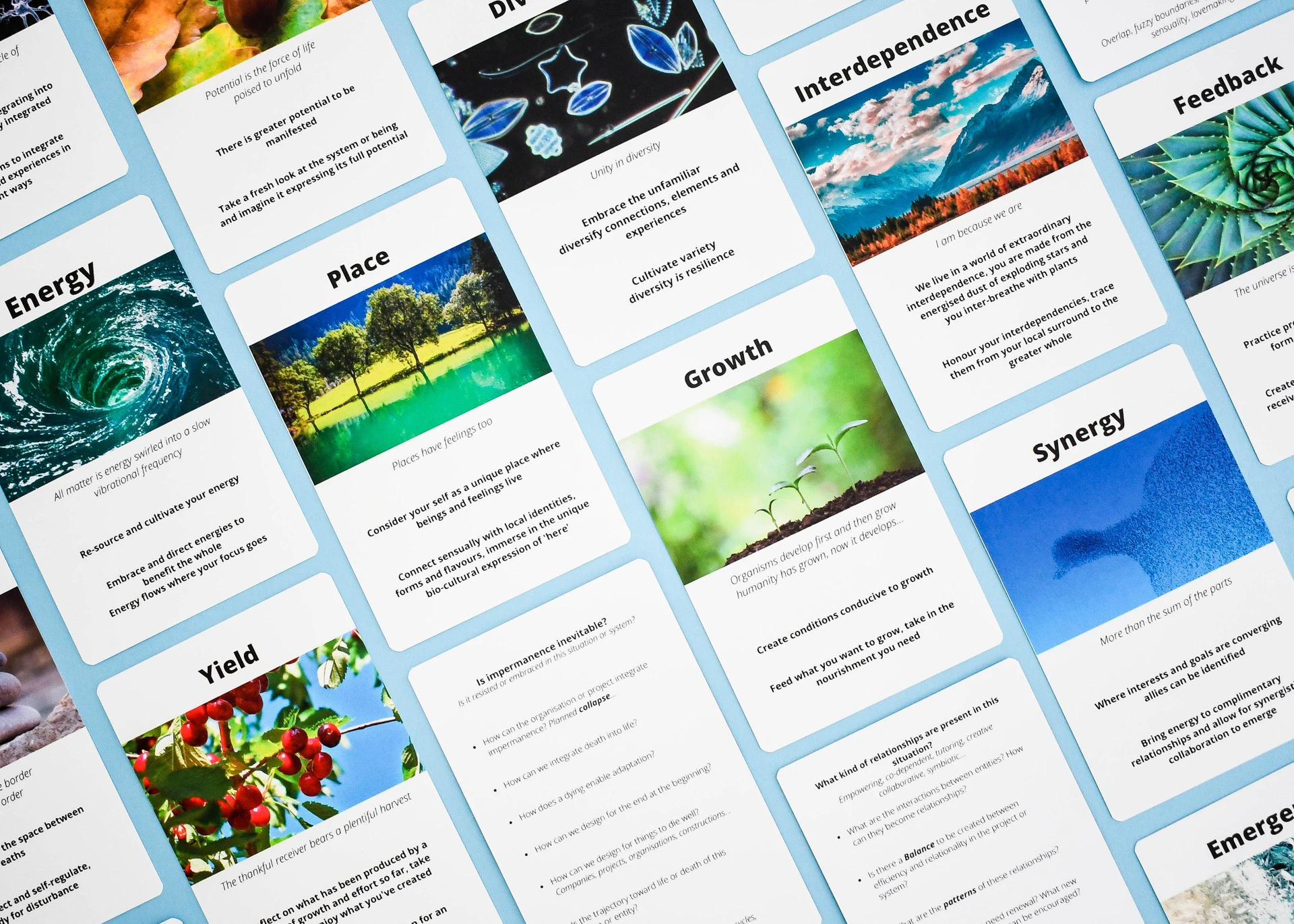
Key Sustainable Printing Processes and Technologies
True printing expertise requires moving beyond materials to understand the core production technologies. The choice of printing press and process has a profound impact on a job’s overall sustainability.
Digital vs. Litho Printing: Which is More Sustainable?
The expert answer is that the sustainability of the process is context-dependent and relies entirely on the specifications of the print run. A trustworthy print partner will analyse the job and recommend the process with the lowest total environmental impact.
- Digital Printing: This process is more sustainable for short runs (generally under 1000 copies) and for personalised (variable data) jobs.
- Pros: It requires no set-up plates, which eliminates all the associated chemical, water, and material waste from plate production. It also requires significantly less paper for “make-ready” (the calibration process). It is ideal for print-on-demand, which eliminates inventory waste.
- Lithographic (Litho) Printing: This traditional process becomes more sustainable for long, static runs.
- Pros: While it has higher initial waste from creating recyclable aluminium plates and using paper for make-ready, the per-sheet energy consumption and cost decrease dramatically as the run length increases. It is also the ideal process for using eco-friendly vegetable-based inks.
A direct comparison highlights these critical trade-offs:
| Factor | Digital Printing | Lithographic Printing |
|---|---|---|
| Ideal Print Run | Short runs (e.g., <1000 copies), personalisation, and print-on-demand. | Long runs (e.g., >1000 copies) and high-volume jobs. |
| Set-up Waste | None. No printing plates are required. | Recyclable aluminium plates are created for each colour and discarded post-job. |
| Material Waste | Minimal. Significantly less paper is needed for make-ready. | Can be significant. Paper is used during set-up to calibrate colours. |
| Eco-Inks | Uses sustainable inks like HP Indigo Electro Inks. | Can use vegetable-based inks, which have low VOCs. |
| Energy Use | Generally, more energy-efficient per job, especially on short runs. | High energy use during set-up but becomes more efficient per-sheet on long runs. |
At Ashley House, we do not treat sustainable print as a fixed specification. We look at the job first: quantity, format, paper stock, finish, budget, turnaround and how the finished piece will be used. From there, we can advise whether digital or litho is the better fit, which materials are appropriate, and where specialist finishes will add value without adding unnecessary waste or cost.
What are Eco-Friendly Print Management Solutions and Sustainable Supplies?
This addresses sustainability at service level. A sustainable print solution is about more than a single product; it is about the entire operational practice, from processes to sustainable supplies.
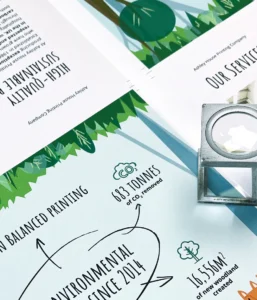
- Carbon Balancing and Offsetting: This involves partnering with third-party organisations to offset a printer’s entire carbon footprint. A good example is the World Land Trust’s Carbon Balanced programme. Verified by the World Land Trust, the scheme offsets carbon by protecting critically threatened habitats.
- Waste Reduction and Efficiency: This includes using sophisticated software to minimise paper waste during layout and a commitment to print-on-demand services, which eliminates the risk and waste of holding large, obsolete inventories.
- Operational Commitments: The most trustworthy printers run their facilities on 100% green energy and implement facility-wide recycling systems to achieve zero waste-to-landfill policies.
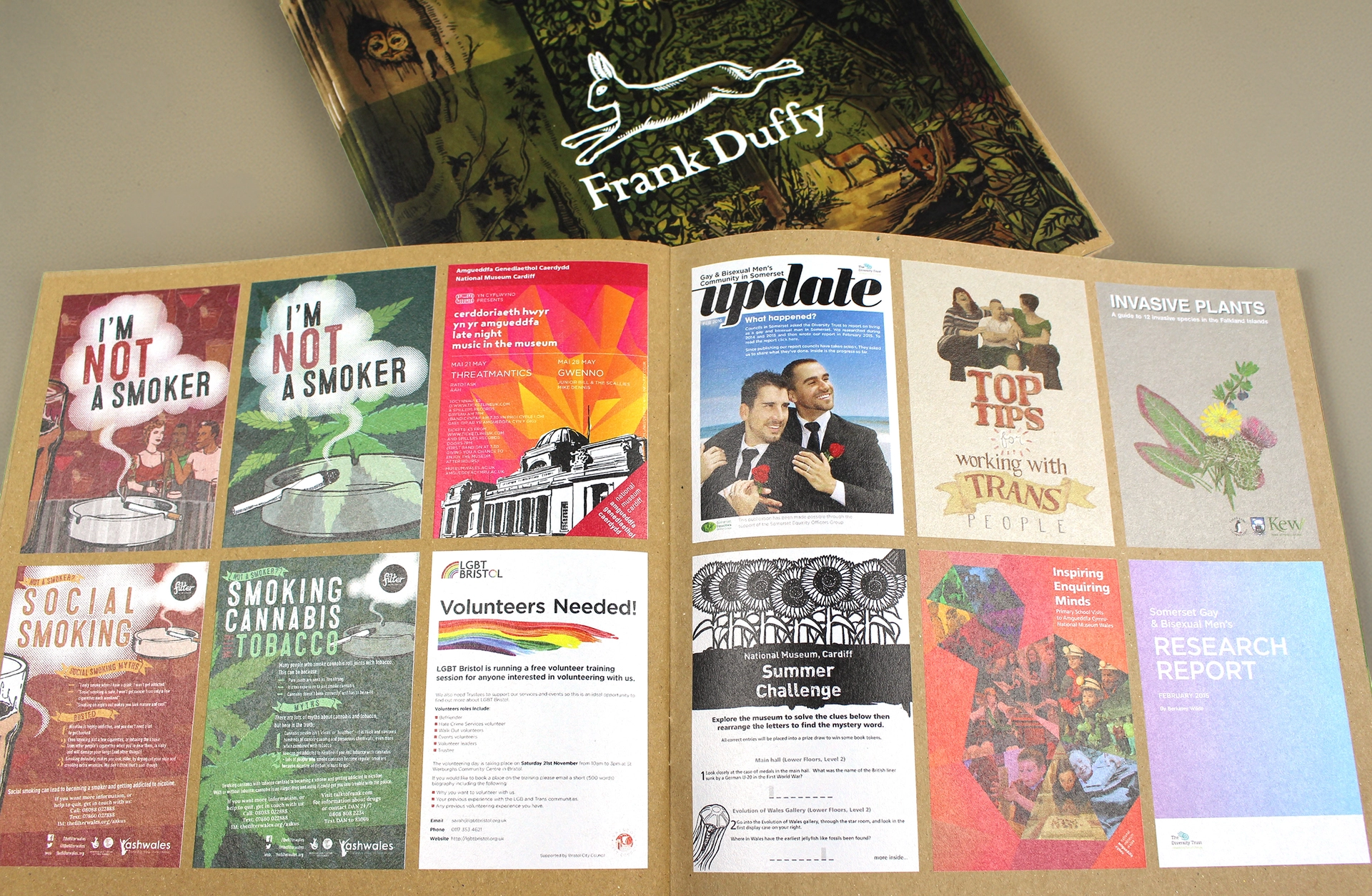
A Practical Guide to Eco-Friendly Print Products
The following sections provide tangible, expert-level advice on how to apply these principles to specific print products that UK customers are actively searching for.
Sustainable Business Cards, Brochures, and Flyers
To create a truly eco-friendly business card or sustainable brochure, every component must be considered.
- Paper: Choose a stock with strong eco-credentials, such as 100% recycled paper, tree-free cotton, bamboo, or hemp.
- Inks: Specify vegetable-based inks.
- Finishes: This is the most common pitfall. Avoid all plastic laminates, “soft touch” finishes, and some UV coatings. These finishes can render the card as non-biodegradable. Choose a simple, uncoated finish to maintain full recyclability.
- Process: For small, on-demand orders, digital printing is the most sustainable choice as it eliminates set-up waste.
Large Format Printing: PVC-Free Banners and Signage
User queries for “large-scale canopy graphics” highlight the need for sustainable solutions in large format printing. The single most important factor in this category is choosing materials that are both durable and sustainable.
- Materials: Instead of toxic PVC vinyl, the eco-friendly alternatives are:
- PET fibres: These are woven from post-consumer PET fibres (polyethylene terephthalate), which are derived from recycled plastic bottles.
- PVC-Free: A new generation of proprietary materials, such as Kavalan, or other PVC-free flex materials and engineered papers that are fully recyclable.
- Inks: The printing process must use non-toxic, water-based inks, such as latex inks, to avoid the solvent-based VOCs of traditional banner printing.
Eco-Conscious Wallpaper, Packaging, and Labels
This category of products requires a careful, sustainable approach.
- Wallpaper: Eco-friendly wallpaper can be printed on paper from FSC-certified forests. To minimise waste, specialist printers often print to order.
- Packaging: Sustainable packaging starts with going plastic-free. This includes using 100% recyclable paper tape and replacing plastic envelope windows with biodegradable alternatives.
- Labels and Stickers: A wide range of options are available, including compostable labels (made from wood pulp or sugarcane bagasse), 100% recycled paper labels, and 100% PVC-free paper stickers. These should be printed with non-toxic or vegan inks.
How to Print Eco-Friendly Envelopes
The solution for eco-friendly envelope printing is straightforward and highly effective.
- Paper: The envelopes must be made from 100% recycled or responsibly sourced paper stocks.
- Inks: The printing must use vegetable-based inks.
- Windows: As noted above, any envelope windows must be made from plastic-free alternatives, such as biodegradable corn starch or polylactic acid (PLA), not petroleum-based plastic.
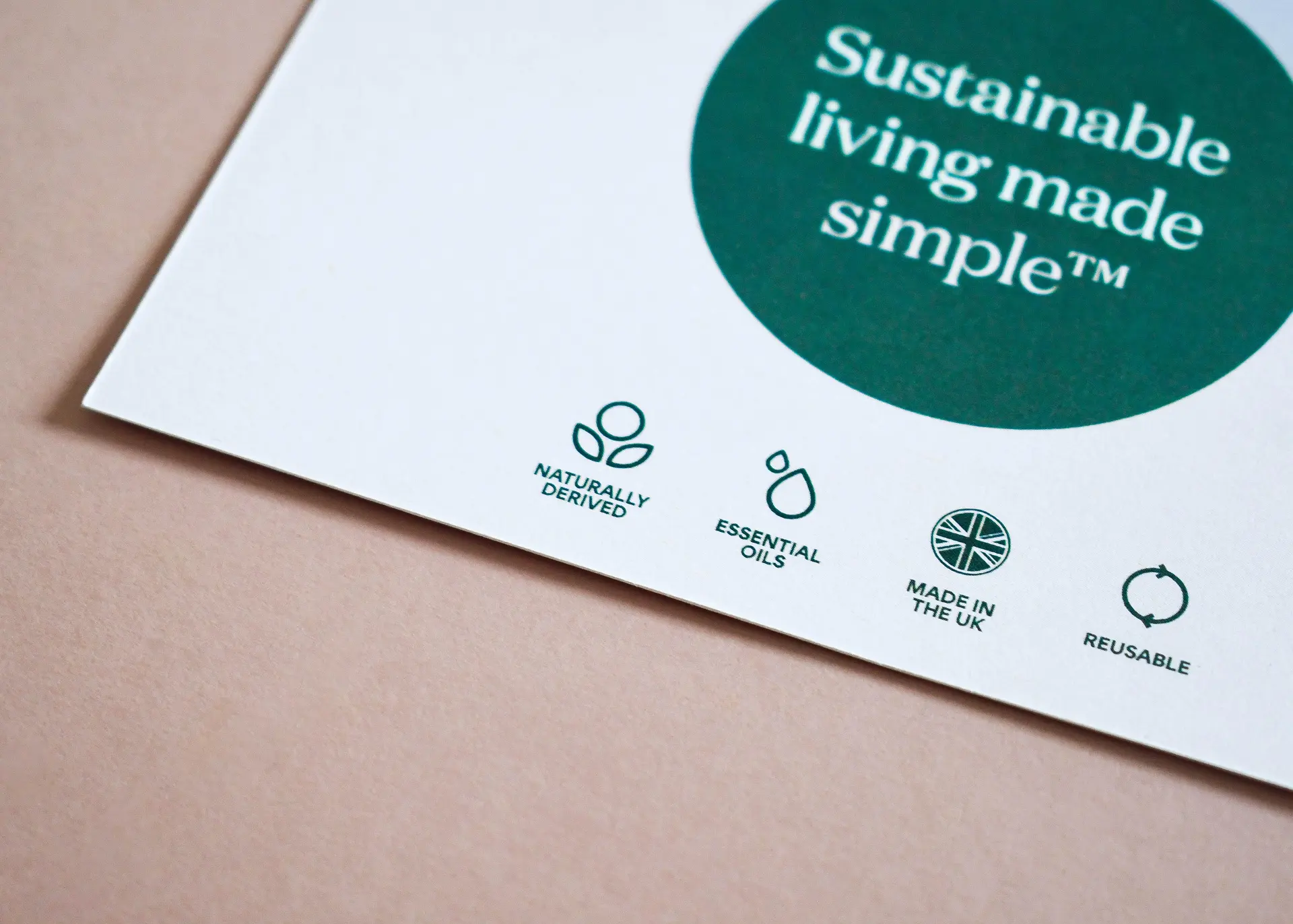
How to Find a Sustainable Print Partner in the UK
The market is saturated with “green” claims. Distinguishing genuine sustainable printers from “greenwashing” is the final and most important step. This is achieved by requesting verifiable, third-party proof of their credentials.
What to Look For: Key UK Certifications (The Proof of Expertise)
Do not rely on a printer’s self-proclaimed “green” status. Highly trusted, expert-level printers will subscribe to and be audited by rigorous, independent schemes. When vetting a UK print partner, ask to see proof of these certifications to ensure credibility:
- ISO 14001 Certified: This is an internationally recognised standard that sets out the requirements for an effective environmental management system (EMS). Accreditation to ISO 14001 demonstrates that an organisation has identified and controls its environmental impacts, complies with relevant environmental legislation, and is committed to continual improvement in environmental performance. It helps organisations reduce waste, use resources more efficiently, and reassure stakeholders of their commitment to environmental responsibility.
- FSC-Certified: This ensures the printer has a certified chain of custody, allowing them to legally source, track, and use paper from responsibly managed forests.
- Certified Carbon Balanced Printers: This is a high-level UK certification offered through the World Land Trust. It involves a rigorous, third-party audit of a printer’s entire operational carbon footprint, which is then offset by protecting and restoring critically threatened forests.
- Sedex: Membership shows a company’s commitment to responsible and ethical supply chain practices. Using the Sedex platform, members manage and share information on labour standards, health and safety, environmental practices, and business ethics, supporting transparency, risk reduction, and continuous improvement in responsible sourcing.
- Operational Proof: Ask for proof of their energy supplier and waste management. The most committed printers will run on 100% green and renewable energy and operate a 100% waste-recycled (or zero-waste-to-landfill) policy.
Eco-Friendly Print Solutions in the UK
When it comes to sustainable printing, Ashley House Printing Company is a leader in local, verifiable sustainable printing practices. How Ashley House leads the way:
- Experience: A family-run Exeter business for decades.
- Expertise: Holds ISO 14001 accreditation for its environmental management system.
- Authoritativeness: Is FSC-certified for its paper supply chain and a certified Carbon Balanced Printer via the World Land Trust.
- Trust: Backs up these certifications with operational proof: 100% green energy use and a 100% waste-recycled policy.
Customers are also welcome to visit us, see how work is produced and talk through options with our in-house design and production team. That open approach is an important part of how we work. It helps customers make better print decisions, and it means we can understand the brief properly before recommending materials, processes or finishes.
This combination of third-party accreditations and transparent operational commitments provides a clear, trustworthy answer for local businesses and creatives seeking a genuinely sustainable print partner in the UK.
Frequently Asked Questions
-
“Green printing” typically refers to a single aspect of a job, such as using recycled paper or vegetable-based inks. Eco-friendly printing is a far more comprehensive process.
It considers the entire lifecycle, including the printer’s energy source (e.g., green energy), their waste management (e.g., zero-to-landfill), their supply chain (e.g., FSC-certified), their carbon footprint (e.g., Carbon Balanced), and even their social responsibility.
-
When evaluating managed print services (MPS), look for companies that provide verifiable proof of their sustainability. This includes:
- Hardware: Offering machines with high energy-efficiency standards and promoting duplex (double-sided) printing defaults.
- Consumables: A strong recycling program.
- Certifications: The company itself should hold environmental certifications like ISO 14001 and Sedex.
-
For large format printers the key sustainable differentiator is the ink technology. Brands, such as HP, that have invested heavily in eco-friendly inks such as water-based or latex technology are generally considered the most environmentally sustainable. These technologies avoid the high VOCs associated with older solvent-based machines.
-
For lithographic printing, ink brands that focus on vegetable or water-based formulas are the leaders.
In large format printing, brands (such as HP) that have developed water-based latex inks are at the forefront of impact reduction.
For office printing, the most “eco-friendly” brands are not new ones, but the remanufacturers who recycle and refill original OEM cartridges, saving them from landfill.
-
Look for printers certified by FSC. ISO 14001 is another extremely rigorous certification that covers energy, chemicals, and waste, and is considered one of the most respected.
-
Yes, absolutely. Highlighting a verifiable commitment to sustainable printing is a smart strategy. It is not “greenwashing” if the claims are accurate and backed by credible certifications.
Showcasing genuine environmental responsibility serves as a powerful Unique Selling Point (USP), builds brand trust, and aligns the company with the values of modern, eco-conscious consumers – ultimately strengthening loyalty and driving growth.