


Paper Weights Explained: What Is GSM in Paper?
GSM stands for grams per square metre. It is the standard measurement for the weight of paper: a sheet of 100gsm weighs 100 grams per square metre, whatever size it is cut to.
That one figure decides whether a magazine feels substantial, whether a leaflet survives a letterbox, how a brochure folds, what a mailing costs to post, and which binding will hold the pages together.
We print magazines, brochures and catalogues at our factory in Exeter, Devon, and this is one of the questions we are asked most often. This guide gives the weight bands with real figures, what each one suits, how weight relates to thickness, and how to settle a weight for your project.
Key points
- GSM is grams per square metre, the weight of one square metre of the sheet. It is a weight, not a measure of thickness.
- Office and copier paper is 80gsm. Publication interiors run 90gsm to 150gsm, covers 200gsm to 300gsm, and business cards 350gsm to 400gsm.
- Two sheets of the same weight can differ in bulk. Uncoated is bulkier than coated, so 150gsm uncoated sits thicker in the hand than 150gsm silk.
- A4 is one sixteenth of a square metre, so an A4 sheet at 100gsm weighs 6.25g. That is how you work out what a mailing will weigh.
- Carbon balanced paper is our standard, at no additional cost, and everything we print on is FSC® certified.
What GSM means and how it is measured
Paper is specified by weight rather than by bulk because weight can be measured identically for every sheet, whatever it is made of and however it is finished. One square metre goes on the scales: if it weighs 120 grams, the sheet is 120gsm.
The GSM scale runs from around 40gsm for newsprint and lightweight inserts up to 400gsm and beyond for heavy covers, and most commercial work sits between 80gsm and 350gsm. The measurement does not change with the size of your print, so A4 and A1 cut from the same sheet are both 120gsm.
Why GSM is not the same as thickness
Weight and bulk are related, and they are not the same measurement. A silk or gloss sheet is coated and compressed during manufacture, giving it a smoother, denser finish. An uncoated sheet of the same weight holds more air and sits noticeably thicker between your fingers. 150gsm uncoated measures around 200 microns, where 150gsm silk is closer to 170. Both weigh the same.
So our pre-press studio asks for the finish as well as the weight. If the feel is what matters to you, the quality you are describing is usually bulk, and the two are specified separately.
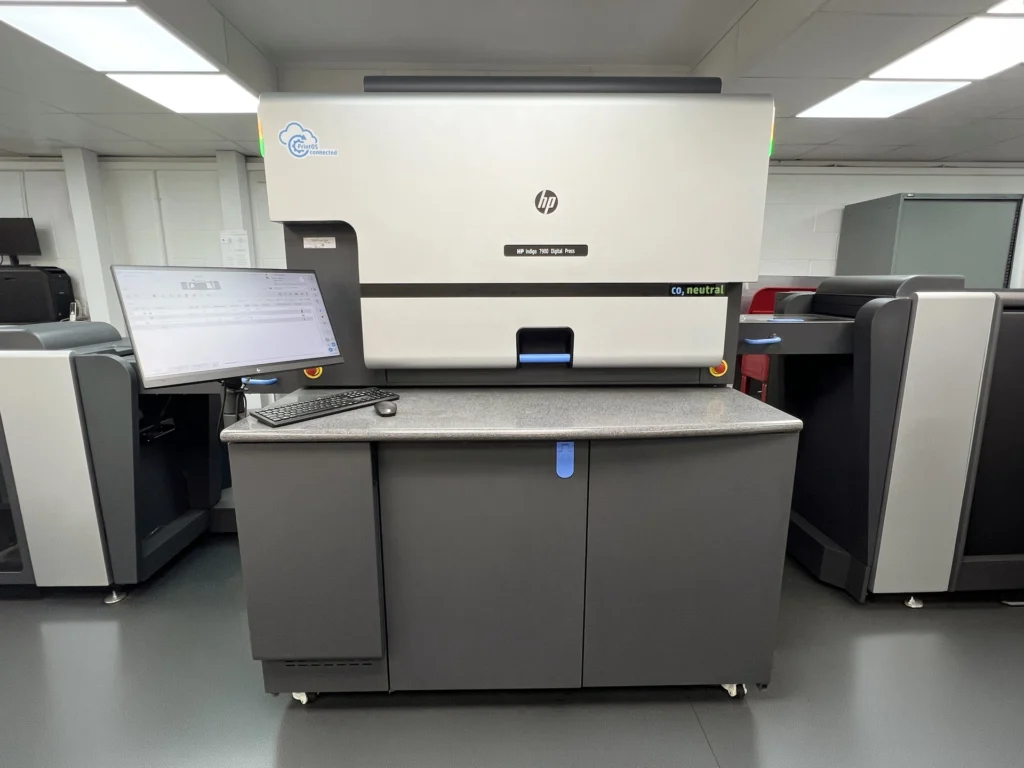
Paper thickness is measured in microns, and it is the figure that counts on a press with a substrate limit. Our HP Indigo 7900 has the heavy substrate kit fitted and is rated by thickness rather than weight: it prints coated, uncoated and recycled stocks at approximately 400gsm, or up to 550 microns.
Paper weights at a glance
The bands below run from newsprint to heavy board, and cover the weights we specify day to day.
How to read the bands
Read the first column as the weight you will be asked for, and the last as a starting point rather than a rule.
| Paper weight (GSM) | Approximate thickness (microns) | Typical products | Feel and best use |
|---|---|---|---|
| 40gsm to 80gsm | 50 to 110 | Newsprint, loose inserts, light catalogue interiors | Translucent, cheap to post, shows ink from the reverse |
| 80gsm to 100gsm | 90 to 130 | Office and copier paper, letterheads, economical interiors | The everyday weight, fine for text |
| 100gsm to 150gsm | 100 to 200 | Magazine, catalogue and brochure interiors, posters | Takes photography well, the most-used interior range |
| 150gsm to 200gsm | 140 to 230 | Leaflets, flyers, self-cover magazines | Holds its shape unsupported |
| 200gsm to 250gsm | 180 to 300 | Magazine and brochure covers, folders, postcards | Card, not paper, folds once creased |
| 250gsm to 350gsm | 280 to 450 | Business cards, menus, invitations, heavy covers | Rigid, needs creasing |
| 350gsm upwards | 400 upwards | Premium covers, heavy board | The top of our digital range |
Please note: micron measurements are approximate. Actual paper thickness varies depending on the paper type, coating and finish. GSM measures paper weight, while microns measure thickness.
This is particularly important when comparing coated silk or gloss papers with uncoated stocks, as their thicknesses can differ considerably despite having the same GSM.
What GSM to choose for each kind of print
A band is a good starting point. What settles a specification is the product, the page count, and how the finished piece will be handled.
Magazines, catalogues and booklets
A multi-page publication normally uses two weights: a lighter text stock inside and a heavier cover on the outside. A typical magazine runs 90gsm to 130gsm on the interior pages with a 200gsm to 300gsm cover. A shorter publication can be self-cover, the same weight throughout, which works well for an 8 or 12-page booklet.
Page count changes the answer twice over. Publications are made up in multiples of four pages, because each sheet folds to four, so designing to a multiple of four avoids paying for blank pages. And the heavier the interior, the more the spine bulks: saddle stitching (FST) works up to around 80 pages depending on the weight, and above that the publication moves to perfect binding (PUR), which we run from 2mm to 50mm thick.
A light uncoated interior with heavy ink coverage on the reverse can read through, and moving up to 100gsm or a coated sheet resolves it. Around 75% of the brochures we produce are now uncoated, a capable and popular choice. Send us your page count and we will specify the pairing for magazine printing or catalogue printing against it.
Brochures, leaflets and flyers
A single-sheet leaflet or flyer has to hold its shape in a hand or a letterbox. 130gsm to 170gsm covers most of them: 130gsm for a high-volume insert, 170gsm where the piece should feel considered, 350gsm where it should feel like card.
Anything from 170gsm upwards is creased before it is folded, or the coating cracks along the fold. For a folded brochure, 150gsm interiors with a 250gsm cover is a common specification, and a short 8-page brochure often works self-cover on 170gsm. The same figures carry across brochure and booklet printing and flyer and leaflet printing.
Business cards and stationery
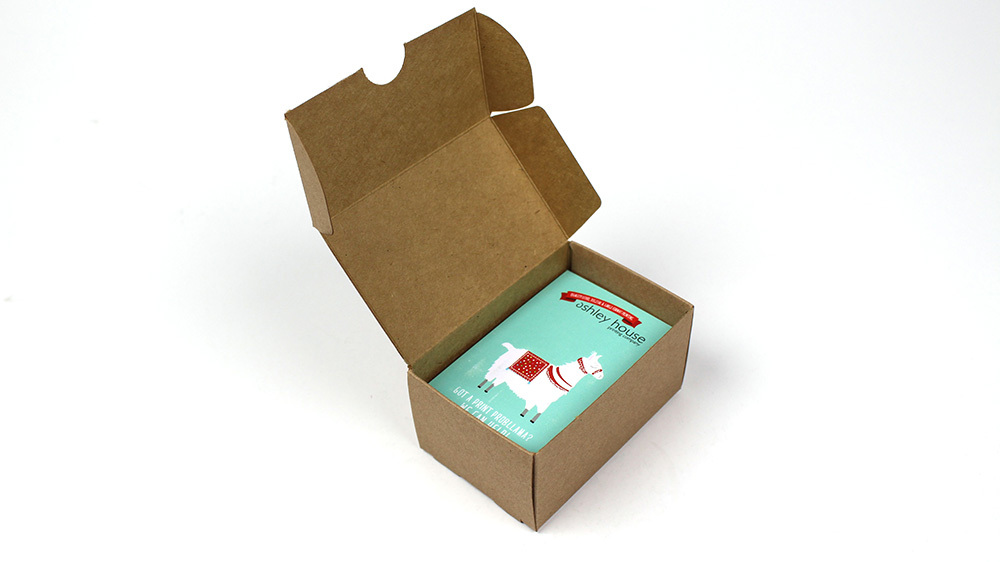
A business card is the heaviest everyday item, and the standard weight is 350gsm, with 400gsm noticeably more substantial to hold. Our online shop sells business cards on three fixed 350gsm stocks as a quick-order option, and a bespoke order prints on any weight or type of paper, including thicker boards and designer papers.
Letterheads sit at the other end. 100gsm or 120gsm suits one that has to run through an office printer and fold into a DL envelope. Presentation folders sit at 300gsm and above, and the full range is on our stationery printing page.
Choosing a weight for your project
Four things settle a weight in practice:
- How the piece will be handled
- How it will be bound
- What it will cost to post
- What your artwork needs
A piece read once and recycled does not need the durability a heavier cover gives a publication that sits on a reception desk for a year.
A heavier sheet costs more to buy and more to post, though quantity is the biggest lever on the price of a print project overall. Every project is priced individually and there is no published price list, so tell us what you are weighing up and we will price the options against each other.
The weight has no bearing on whether the paper is a sustainable choice.
Everything we print on is FSC® certified, and carbon balanced paper has been our standard since 2014, at no additional cost, through our certification as a Carbon Balanced Printer with the World Land Trust.
Recycled sheets come coated and uncoated, so there is a recycled or carbon balanced equivalent at most of the bands above. We are also ISO 14001 accredited and run on 100% green energy, and our eco-friendly printing page sets the certifications out in full.
Postage and a direct mail piece
On a mailing the weight of the piece is a cost, so work it out before the specification is signed off. The arithmetic is straightforward, because the A sizes are built on the square metre: A0 is one square metre and A4 is one sixteenth of it, so an A4 sheet at 100gsm weighs 6.25g. Multiply by the number of leaves, remembering that a four-page A4 section is one A3 sheet folded once.
A 32-page A4 magazine with a 250gsm cover and a 100gsm interior comes to about 119g before the envelope: 87.5g for the 28 interior pages and 31.25g for the cover. Drop the interior to 90gsm and it comes down to about 111g.
Royal Mail prices mail in weight bands, and crossing a band changes the rate on every copy, so a few grams is a real figure across a large mailing. Check the current Royal Mail prices for the format you are sending, tell us the limit you are working to, and we will specify a sheet for your direct mail that lands inside it.
Next steps
If you’re unsure which option is right for your project, the quickest way to settle a weight is to hold the paper. Send us your specification, with the format, page count and quantity, and we will produce a no-obligation quotation and send samples of the papers we would recommend.
How are magazines printed? walks through the production a specification sits inside, and what it costs to print a magazine covers how the paper decision moves the price.
Our friendly team are based in-house at our factory in Exeter, Devon, Mon-Fri 8am to 5:30pm. Give them a call on 01392 202320 and we will be happy to advise you.
Frequently Asked Questions
-
GSM stands for grams per square metre: the weight of one square metre of the sheet. 120gsm paper weighs 120 grams per square metre whatever size it is cut to, and a higher GSM means a heavier, usually stiffer sheet.
-
130gsm to 170gsm suits most leaflets and flyers. Use 130gsm for a high-volume insert, 170gsm where the piece should feel considered, and 350gsm where it should feel like card. Anything from 170gsm upwards is creased before folding.
-
Yes. 300gsm counts as card rather than paper, rigid enough to stand up on its own, and it is the usual weight for menus, invitations and heavy covers. A business card goes heavier again, at 350gsm to 400gsm.
-
For office and copier use, 80gsm: it is stiffer, feeds more reliably and shows less print from the reverse. 70gsm costs less and weighs less to post, which counts on a high-volume mailing.
-
Standard office and copier paper is 80gsm. Commercial work starts around 90gsm for publication interiors and runs to 400gsm and above for covers, printed on sheet-fed presses rather than an office printer.