Brochure design and printing costs in the UK
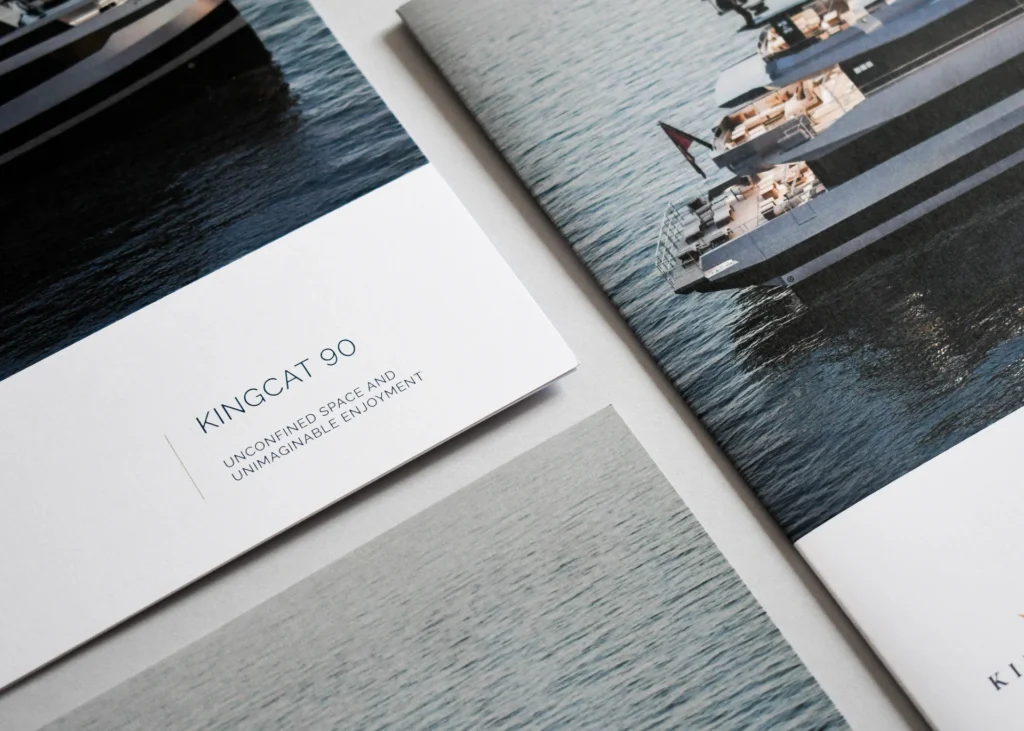
When budgeting for a brochure, it’s important to consider two separate costs: design and printing. Each is calculated differently, with printing costs varying significantly depending on the quantity, paper stock, format and finishing options you choose.
Brochure design and printing costs are calculated individually, as prices can vary significantly depending on the quantity, paper stock, format and finishing options. Even a standard 16-page A4 brochure can vary considerably in price depending on these choices. Below, we explain how design and printing costs are calculated, which factors have the greatest impact on price, and what information we need to provide you with an accurate, tailored quotation. If you already have a specification in mind, our brochure printing page covers the formats and binding we produce for customers across the United Kingdom, from our factory in Exeter, Devon.
Key points
- Quantity affects the price more than anything else. The cost per copy falls sharply as the run grows, because the set-up is spread across more copies.
- Design and printing are priced separately. If you supply print-ready artwork, you eliminate the design costs entirely.
- Digital printing is the economical choice up to around 500 copies. Above that, sheet-fed litho takes over.
- Page count works in multiples of four. Designing to 8, 12, 16 or 20 pages avoids paying for blank sheets.
- Carbon balanced paper has been our standard since 2014 at no additional cost, so the sustainable option is not the expensive one.
What you are actually paying for
A brochure quotation is built from six things, and every one of them is a decision you control: quantity, page count, format, stock, binding, and finishing plus delivery.
In addition to printing costs, there may be charges for design, artwork and pre-press preparation to ensure your brochure is ready for production. If you supply your own print-ready artwork, these costs can be reduced or avoided altogether.
Design and print are two separate costs
Design costs are based on the time required to create the layout and prepare the artwork, while printing costs are determined by the materials, production processes and finishing options involved.
The two answer different questions, so when you compare suppliers, check which of them you have been quoted for. Our graphic design department and our presses are both in-house, so we can price either half or both.
How much brochure design costs in the UK
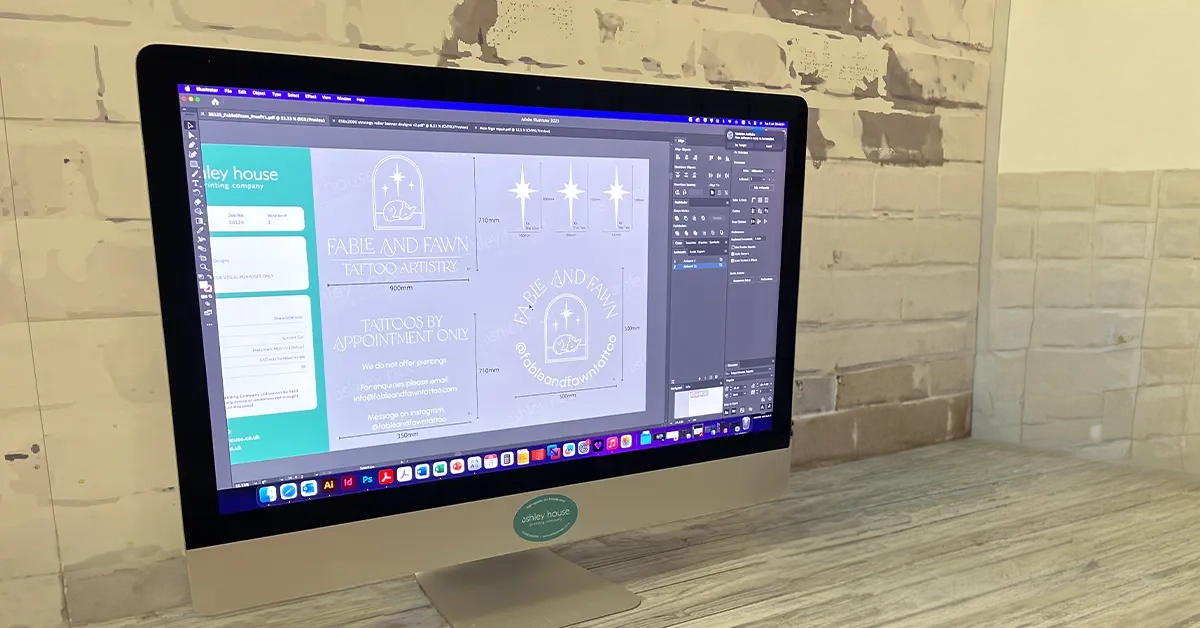
Design is priced on time, and the time follows the page count and how much of the content already exists.
A 4 page brochure where the copy is written, the photography is shot and the brand guidelines are settled is a short project. A 24 page piece that needs copy, image sourcing and a layout built from scratch is a different order of work.
The variables that decide a design fee are consistent across the industry:
- Page count, and whether the layout repeats across spreads or changes on every page
- Whether copy and photography are supplied, or need writing and commissioning
- How settled the brand is, and whether guidelines exist
- How many rounds of amends you expect
- Whether this is a one-off, or the first issue of something that will be reused
Creating a reusable design template may involve a higher initial cost, but it can significantly reduce design costs for future editions.
Supplying your own print-ready artwork
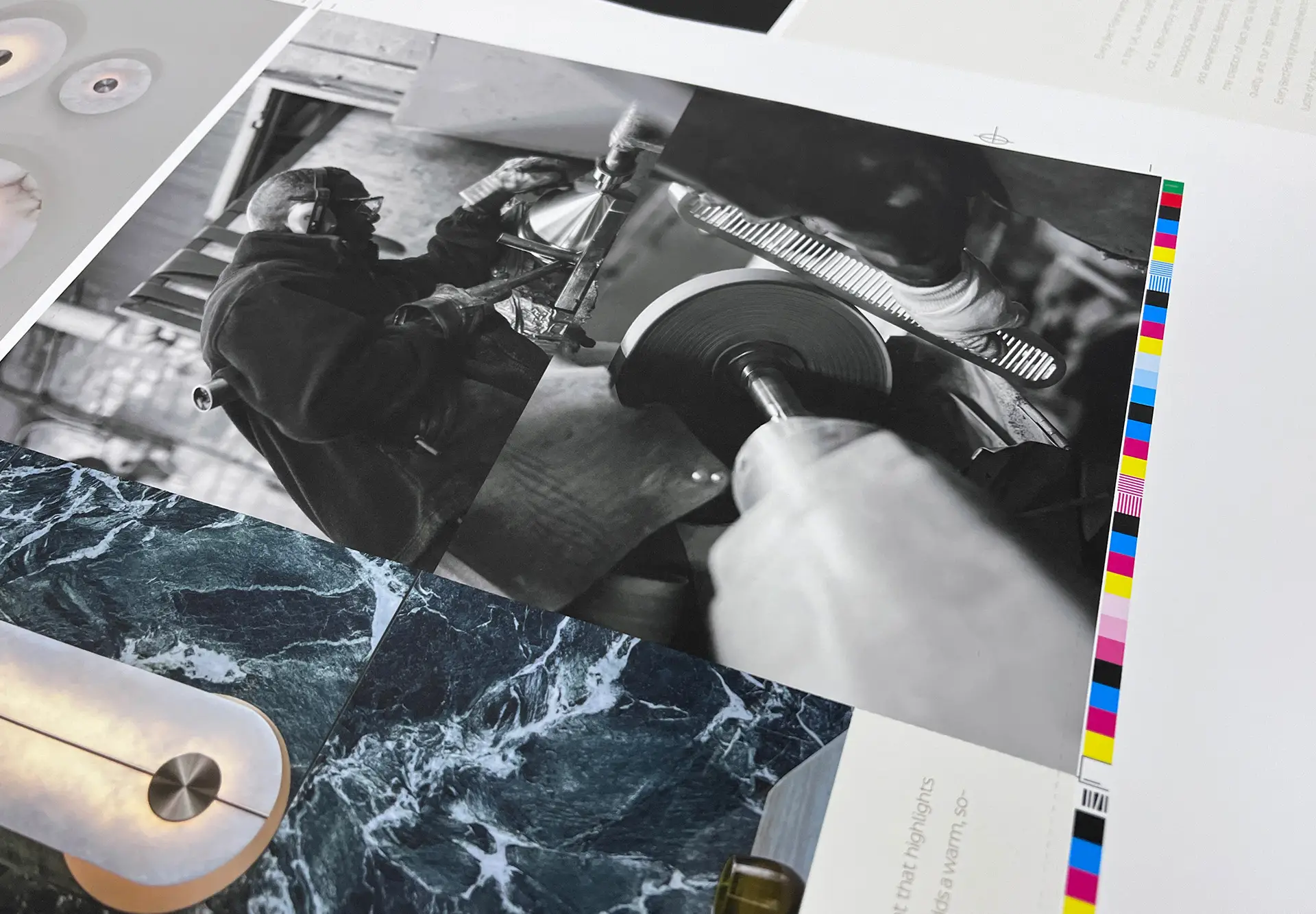
If you have a designer, or an in-house marketing team, you can remove that cost from the project. We need a print-ready PDF with crop marks, bleed, 300 dpi images and CMYK colour, or working files from InDesign, Illustrator or Photoshop.
Our pre-press studio checks your artwork before anything reaches a press and tells you what needs changing. Our guide on how to set up a brochure for printing covers what we look for.
How much brochure printing costs
Print cost is dominated by quantity. Set-up, make-ready and plates are spread across the run, so the cost per copy falls steeply between 100 and 1,000 copies and then flattens out.
This is why a quotation for 250 and one for 1,000 can look closer in total than you would expect, and why ordering the quantity you will actually use is usually the single best decision you make. A reprint six months later costs more than one longer run.
After quantity, the order of influence is page count, then stock, then binding, then finishing. Format matters less than people assume, as long as it is a standard trimmed size.
Digital or litho, and where the crossover sits
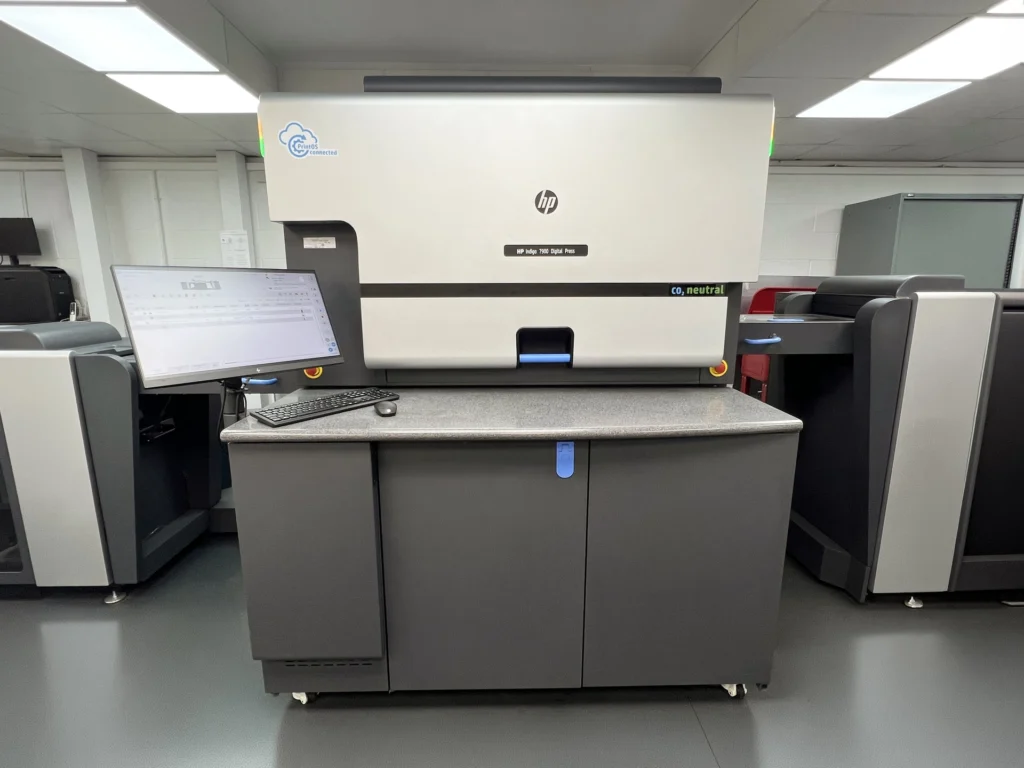
Up to around 500 copies, digital is the economical choice. We print digitally on an HP Indigo 7900, which is a digital offset press rather than a laser printer, so there is no plate cost and no lengthy make-ready to absorb.
Above about 500 copies, our Heidelberg Speedmaster sheet-fed litho presses take over. The plates are made ready once and the running cost per sheet is lower, so the longer the run, the more sense litho makes. It is a question of the right press for your quantity.
What moves the price up or down
These are the decisions that change a quotation most, in roughly the order they matter.
| Keeps the cost down | Pushes the cost up | |
|---|---|---|
| Quantity | One longer run | Repeat short runs of the same item |
| Page count | A multiple of four: 8, 12, 16, 20 | 14 or 18 pages, which pays for blank sheets |
| Format | A3, A4, A5 or 210mm x 210mm | A non-standard trimmed size |
| Paper | Standard uncoated or coated stocks | Designer papers, heavy boards, specialist textures |
| Binding | Saddle stitched (FST) | Perfect bound (PUR) or wiro bound |
| Finishing | No lamination, or matt and gloss | Soft touch lamination, spot UV varnish, foiling, embossing |
| Artwork | A print-ready PDF supplied | Full design and origination from scratch |
| Turnaround | A standard schedule | A rush |
Where the genuine savings are
The savings that cost you nothing in quality: order the quantity you will use, work to a multiple of four pages, stay on a standard format, and get your artwork right before it reaches us.
About 75% of the brochures we produce are now printed on uncoated stock, which is a capable and popular choice rather than a budget one. For a lot of brands it is the better look.
Where we would not recommend saving is the cover. A heavier cover stock adds very little to the total and changes how the brochure feels in the hand, which is the first thing your reader judges.
Does eco-friendly printing cost more?
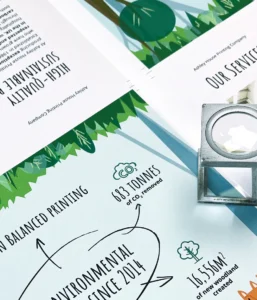
Not with us. We have printed on carbon balanced paper as standard since 2014, at no additional cost to our customers.
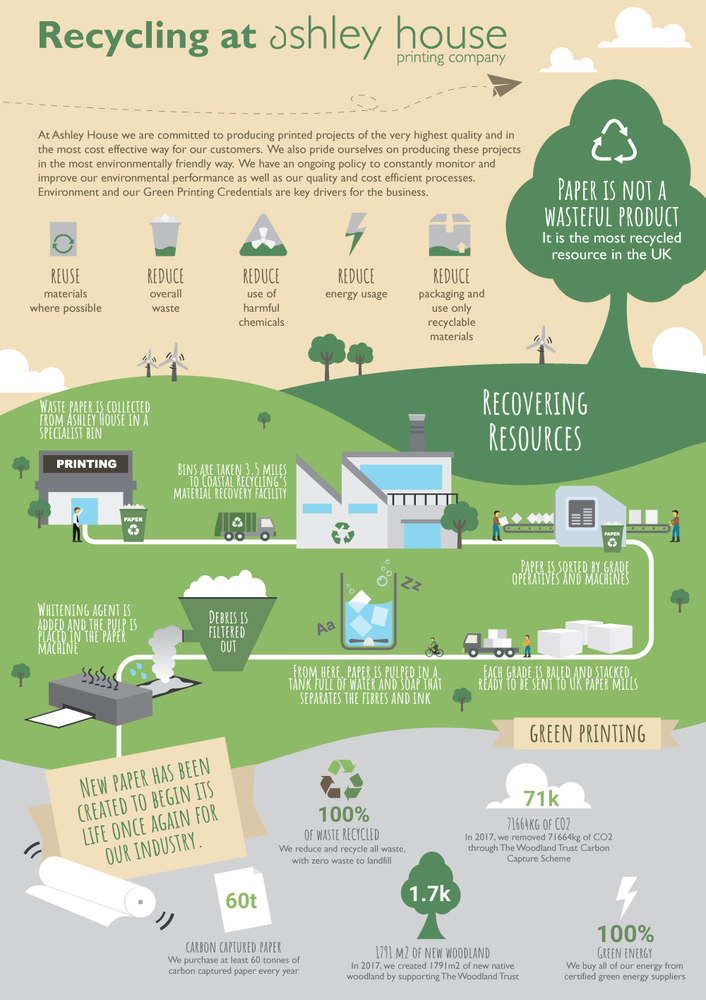
We are a certified Carbon Balanced Printer through the World Land Trust, we are FSC® certified, which means our paper is traceable to responsibly managed forests, and we are ISO 14001 accredited, the international standard for managing environmental impact. We run on 100% green energy with a zero landfill policy and plastic-free packaging.
Carbon balanced paper as standard since 2014
The practical point for a budget is that sustainability is not a line item you can remove to save money here, because it is already in the base price.
Where you specify recycled stock rather than carbon balanced, the cost depends on the particular material in the same way any other does. Recycled comes in both coated and uncoated, and everything we print on is FSC® certified. There is more detail on our eco-friendly printing page.
How to get an accurate brochure printing quote
The difference between a rough figure and an accurate one is the detail in the specification. Send us your specification and we will produce a no-obligation quotation.
If you are unsure which option is right for your project, give our friendly team a call on 01392 202320 and we will be happy to advise you. Our team is in-house in our Exeter factory, Monday to Friday, 8am to 5:30pm.
What to put in your specification
- Quantity, and if you are likely to reorder
- Page count, including the cover
- Finished size, for example A4 portrait
- Stock for the cover and for the text pages, or simply the look you are after
- Binding, if you already know it
- Any finishing: lamination, spot UV varnish, foiling, embossing
- If you are supplying artwork, or need design
- Delivery address or addresses, and the date you need them
If you do not know half of these, that is fine. Tell us what the brochure is for, who it goes to and roughly how many you need, and we will work through the rest with you.
Next steps
If you have a specification, send it over and we will price it accurately. If you are still shaping the project, our brochure printing page sets out the formats, stocks and binding we produce, and the brochures page shows the range.
If the environmental side is part of your business case, our eco-friendly printing page has the credentials and what sits behind them.
Frequently asked questions
-
There is no single figure, because quantity, page count, format, stock, binding and finishing all move it, and quantity moves it most. Every project is priced individually, so send us the specification and we will price it accurately.
-
Design is charged on time rather than per page, so a page rate is a rough guide at best. The question worth asking any designer is what the fee covers: layout only, or copy, image sourcing and amends as well.
-
Order the quantity you will actually use rather than reprinting later, work to a multiple of four pages, stay on a standard format, supply print-ready artwork, and allow a standard turnaround. Those five together make more difference than any single choice of stock.
-
Yes. Below around 500 copies we print digitally on the HP Indigo 7900, so there is no plate cost and short runs stay economical. Above that, litho is usually the better value.
-
Our team is in-house Monday to Friday, 8am to 5:30pm, and we come back on a complete specification quickly. An incomplete one takes longer, because we have to ask questions first.